


Acoustic panels for stylish wall design and perfect room acoustics
Acoustic panels revolutionize modern room design by combining top-notch sound insulation with Scandinavian design. Who doesn't know it: Stark walls, high ceilings, and minimalist furniture often lead to an unpleasant echo in modern apartments or offices. A high-quality acoustic panel specifically breaks these sound waves, noticeably lowers the noise level, and simultaneously creates a warm, inviting room climate. Through the combination of sound-absorbing felt and elegant wooden slats, these wall coverings are much more than just a functional element – they create visual highlights in every room as wooden panels.
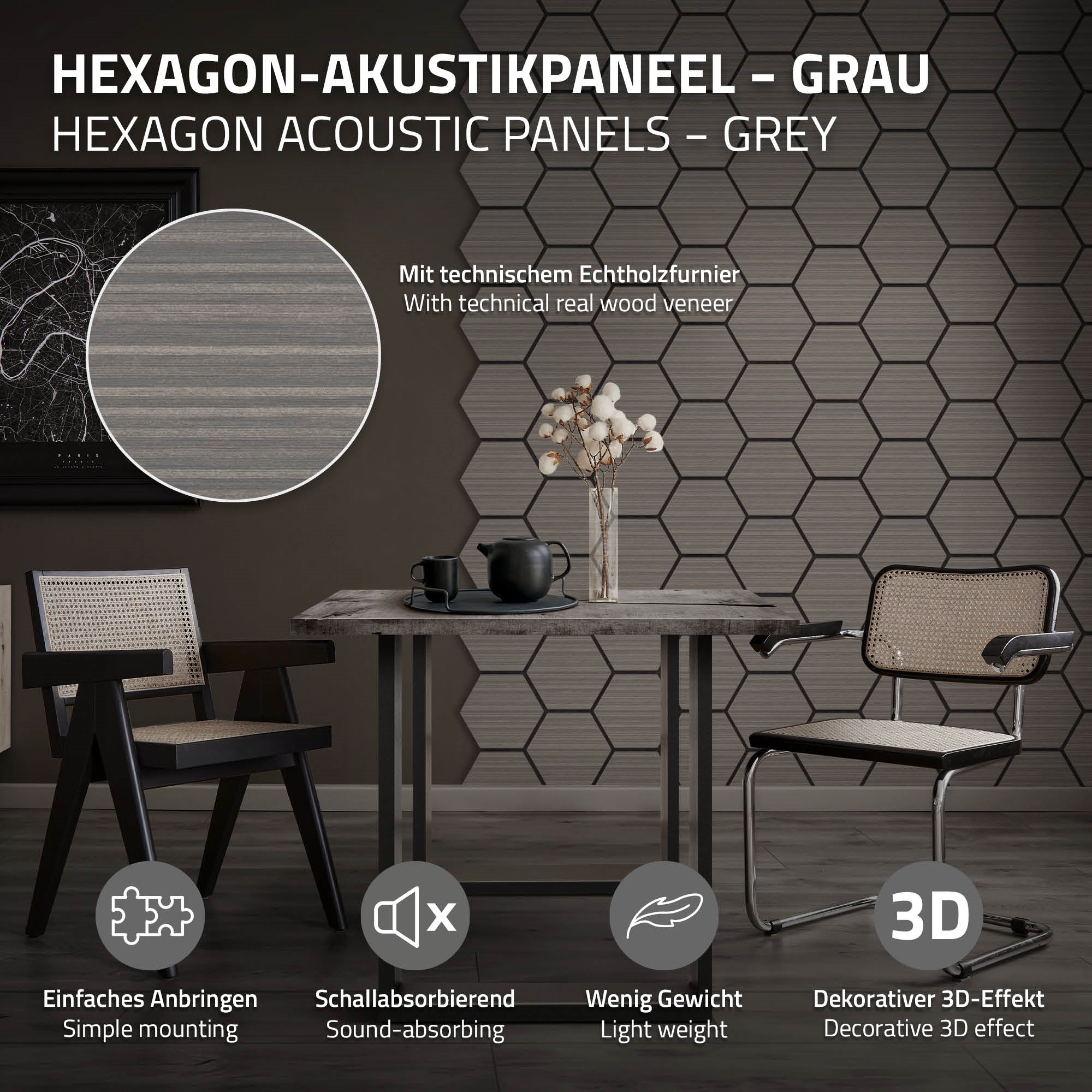
Particularly in demand are elegant acoustic panel wood variants that harmoniously blend into various furnishing styles. The selection at ML-Design ranges from warm oak tones to dark walnut wood to modern, anthracite shades. Whether in the home living room behind the television, in the bedroom as a headboard for the bed, or in a productive open-plan office: The possibilities for use are virtually limitless. They enhance bare walls in no time and can be installed without prior knowledge.
But which variant is optimal for your structural conditions? Decisive for the selection are, in addition to the type of wood, the thickness of the backing felt, the room size, the desired mounting method, and the specific requirements for fire protection or moisture resistance.
The structure: What is an acoustic panel?

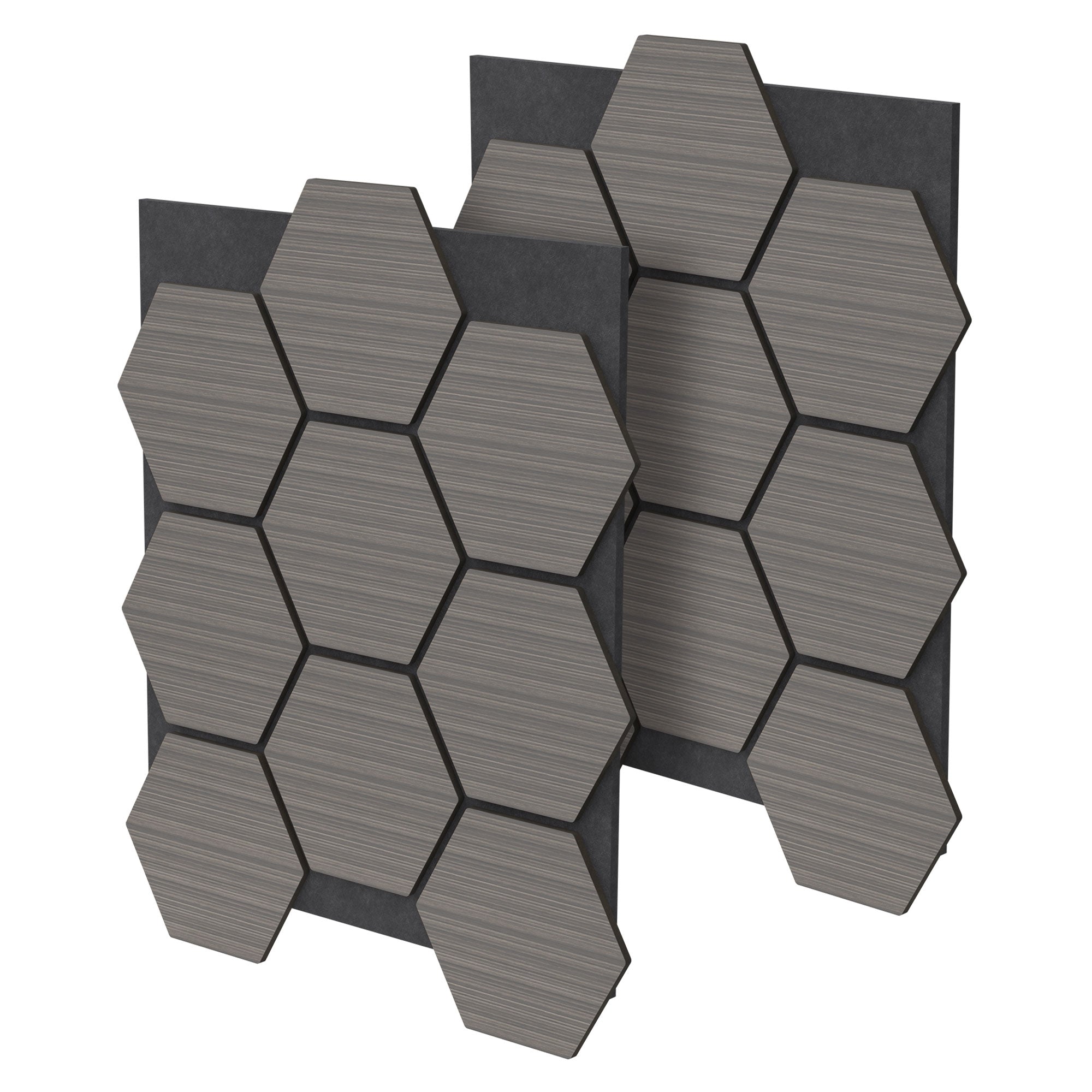
A classic acoustic panel is cleverly constructed in three layers to combine both optical and functional advantages:
- The backing plate made of acoustic felt forms the basis. It consists of a compressed felt layer that can absorb incoming sound waves instead of reflecting them back into the room.
- The slats are often made of MDF or comparable wood materials and are attached to the felt at regular intervals. They contribute to the design and can additionally aid in sound diffusion.
- The surface of the slats can, for example, be finished with real wood veneer or a decorative coating. This creates different wood optics and colors for various furnishing styles.
Why room acoustics and design go hand in hand

In modern architecture, smooth surfaces such as exposed concrete, large window fronts, tiles, parquet, and reduced furniture concepts often dominate. What looks visually elegant and minimalist can quickly lead to an unpleasant room sound acoustically. Sound waves are reflected by hard surfaces, which can result in longer reverberation times. Acoustic panels therefore combine a functional improvement of room acoustics with a decorative wall design.
- Visual warmth: Wood optics bring a natural and homely atmosphere into the room.
- Structured line guidance: The slats provide a characteristic wall design and can influence the spatial effect depending on their orientation.
- Zoning of living areas: Individual panels can create optical areas, for example around the television, the dining area, or a reading corner.
Detailed material and quality guide
![[ki] ML-DESIGN Akustikpaneele in Holzoptik Wandpaneele Hexagon Schallabsorber Schalldämmung](https://media.ecd-parts.de/Webshop-ECD-Germany/Content/Bilder/Wandverkleidung/ML-1610_richcontent_Beispiel_2.jpg)
Those who want to buy acoustic panels quickly realize that there are different materials, designs, and quality levels. To find a suitable model, it is therefore worthwhile to take a closer look at the structure, the materials used, and the desired optics.
The backing material: Felt and its properties
The acoustic felt forms the rear support layer in many panels and can contribute to sound absorption. Depending on the product, the material, thickness, density, and color vary. Therefore, those who place particular value on improved room acoustics should pay attention to the technical specifications of the respective manufacturer.
The lamella core: MDF or solid wood
The lamellas of many acoustic panels are made of MDF or comparable wood materials. MDF allows for a uniform shape and a wide range of surfaces. Solid wood, on the other hand, can convey a particularly high-quality character through its natural grain and individual appearance.
The surface finishing: real wood veneer and decor
The surface largely determines the appearance of the acoustic panel. Real wood veneer brings the natural grain of wood to the wall, while decorative foils or coatings allow for different colors and designs. Depending on the execution, the panel can be designed, for example, in oak, walnut, or other shades.
Areas of application: Where do acoustic panels unfold their full effect?
Acoustic panels can be used in many private and commercial areas. They are particularly interesting in rooms with many hard surfaces, where disturbing reverberation or an unsettled noise environment occurs.
Living room and home theater
In the living room, acoustic panels are often used behind the television or a soundbar. They combine decorative wall design with a possible improvement in room acoustics. At the same time, a modern background surface is created that can be well combined with TV furniture and other furnishings.
Bedroom
In the bedroom, acoustic panels can be used as decorative wall design behind the bed. A design where the panels serve as an optical headboard is particularly popular, giving the room a warm and cozy atmosphere through the wood look.
Hallway and entrance area
Hallways are often long, narrow, and equipped with few pieces of furniture, which can lead to stronger sound reflection. An acoustic panel on a wall can not only contribute to room design but also create a structured and homely atmosphere.
Home office and office spaces
Acoustic panels can also be used sensibly in a home office or office. A targeted wall design behind the desk can enhance the background during video conferences and simultaneously contribute to improving room acoustics. In conference rooms or larger office spaces, multiple panels can be used to make the noise environment more pleasant.
The most important questions about acoustic panels
Before purchasing, various questions arise regarding the effect, installation, and maintenance of acoustic panels. The most important points help to find the suitable version for one's own room.
What do acoustic panels really bring?
Acoustic panels can help reduce disturbing reverberation and sound reflections in indoor spaces. The actual effect depends, among other things, on the size of the treated area, the construction of the panel, the existing room, and other absorbing materials. Especially in rooms with many hard surfaces, additional sound-absorbing elements can make the room feel significantly more pleasant.
What are the disadvantages of acoustic panels?
Despite their advantages, there are some points that should be considered before purchasing. These include the additional space requirements, the maintenance effort, and the potentially higher acquisition costs compared to simple wall paint or wallpaper, depending on the design.
- Dust: The slat structure can cause dust and dirt to accumulate on the surfaces.
- Room depth: With a full wall covering, the panel takes up some room depth.
- Acquisition costs: High-quality versions can be more expensive than classic wall design.
- Color effect: Dark wood looks can make a room appear smaller or darker.
- Mounting: When installing shelves, pictures, or other objects, the mounting points must be planned accordingly.
Is it better to screw or glue acoustic panels?
Acoustic panels can be either screwed or glued depending on the product and substrate. Which option is better suited depends on the wall condition, the weight of the panel, and the manufacturer's specifications. Screwing often provides a secure attachment and allows for later dismantling, while gluing can enable quick installation without drill holes.
- Screwing: A good choice for a stable attachment and a relatively simple later dismantling.
- Gluing: A practical solution for suitable, smooth, and load-bearing substrates without drilling work.
Can mold grow behind acoustic panels?
Under normal, dry living conditions, the installation of acoustic panels is usually unproblematic. However, the condition of the wall is crucial. If there are permanently damp or cold exterior walls, it should be checked before installation whether moisture or condensation is present. In damp rooms, only panels and materials suitable for this purpose should be used.
- Damp exterior walls should be checked for possible moisture problems before installation.
- In damp rooms, the manufacturer's specifications regarding the suitability of the respective panel must be observed.
- A substructure can allow for ventilation depending on the structural situation.
- Regular ventilation supports a healthy indoor climate.
Step-by-step guide to installation
The installation of acoustic panels can also be carried out by DIY enthusiasts with some preparation. Key factors are a clean substrate, precise cutting, and careful alignment of the individual elements.
- Measure the wall area and determine the required number of panels.
- Clean the substrate and check for unevenness.
- Cut panels to the required dimensions.
- Align and secure the first panel precisely.
- Install additional panels flush or according to the intended slat grid.
- Check all joints and fastening points after installation.
Care and long-term value retention
Acoustic panels generally do not require extensive maintenance. Regular and gentle dust removal, as well as careful treatment of the wood surfaces, help to maintain the appearance in the long term.
- Dust removal: Regularly clean the slats and gaps with a soft brush attachment or duster.
- Stain treatment: Remove dirt as soon as possible with a slightly damp cloth.
- Avoid cleaning agents: Aggressive or abrasive cleaning agents can damage the surface.
- Care for wood surfaces: For treated real wood veneers, suitable care products can be used according to the manufacturer's instructions.
Conclusion: Secure room comfort and design from ML-Design now
Acoustic panels combine modern interior design with a functional improvement of room acoustics. They can reduce disturbing reverberation, improve speech intelligibility in living spaces and offices, and at the same time create a stylish wall design as decorative wood panels. Thanks to different materials, colors, and designs, the elements can be used flexibly and adapted to the existing furnishings.
Invest in a new living experience that not only looks good but can also provide a more pleasant room acoustics. Discover the variety of high-quality acoustic panels from ML-Design now, choose your suitable wood color tone, and find the perfect combination of stylish wall design and pleasant room acoustics for your home.




Acoustic panels for stylish wall design and perfect room acoustics
Acoustic panels revolutionize modern room design by combining top-notch sound insulation with Scandinavian design. Who doesn't know it: Stark walls, high ceilings, and minimalist furniture often lead to an unpleasant echo in modern apartments or offices. A high-quality acoustic panel specifically breaks these sound waves, noticeably lowers the noise level, and simultaneously creates a warm, inviting room climate. Through the combination of sound-absorbing felt and elegant wooden slats, these wall coverings are much more than just a functional element – they create visual highlights in every room as wooden panels.
Particularly in demand are elegant acoustic panel wood variants that harmoniously blend into various furnishing styles. The selection at ML-Design ranges from warm oak tones to dark walnut wood to modern, anthracite shades. Whether in the home living room behind the television, in the bedroom as a headboard for the bed, or in a productive open-plan office: The possibilities for use are virtually limitless. They enhance bare walls in no time and can be installed without prior knowledge.
But which variant is optimal for your structural conditions? Decisive for the selection are, in addition to the type of wood, the thickness of the backing felt, the room size, the desired mounting method, and the specific requirements for fire protection or moisture resistance.
The structure: What is an acoustic panel?
A classic acoustic panel is cleverly constructed in three layers to combine both optical and functional advantages:
- The backing plate made of acoustic felt forms the basis. It consists of a compressed felt layer that can absorb incoming sound waves instead of reflecting them back into the room.
- The slats are often made of MDF or comparable wood materials and are attached to the felt at regular intervals. They contribute to the design and can additionally aid in sound diffusion.
- The surface of the slats can, for example, be finished with real wood veneer or a decorative coating. This creates different wood optics and colors for various furnishing styles.
Why room acoustics and design go hand in hand
In modern architecture, smooth surfaces such as exposed concrete, large window fronts, tiles, parquet, and reduced furniture concepts often dominate. What looks visually elegant and minimalist can quickly lead to an unpleasant room sound acoustically. Sound waves are reflected by hard surfaces, which can result in longer reverberation times. Acoustic panels therefore combine a functional improvement of room acoustics with a decorative wall design.
- Visual warmth: Wood optics bring a natural and homely atmosphere into the room.
- Structured line guidance: The slats provide a characteristic wall design and can influence the spatial effect depending on their orientation.
- Zoning of living areas: Individual panels can create optical areas, for example around the television, the dining area, or a reading corner.
Detailed material and quality guide
Those who want to buy acoustic panels quickly realize that there are different materials, designs, and quality levels. To find a suitable model, it is therefore worthwhile to take a closer look at the structure, the materials used, and the desired optics.
The backing material: Felt and its properties
The acoustic felt forms the rear support layer in many panels and can contribute to sound absorption. Depending on the product, the material, thickness, density, and color vary. Therefore, those who place particular value on improved room acoustics should pay attention to the technical specifications of the respective manufacturer.
The lamella core: MDF or solid wood
The lamellas of many acoustic panels are made of MDF or comparable wood materials. MDF allows for a uniform shape and a wide range of surfaces. Solid wood, on the other hand, can convey a particularly high-quality character through its natural grain and individual appearance.
The surface finishing: real wood veneer and decor
The surface largely determines the appearance of the acoustic panel. Real wood veneer brings the natural grain of wood to the wall, while decorative foils or coatings allow for different colors and designs. Depending on the execution, the panel can be designed, for example, in oak, walnut, or other shades.
Areas of application: Where do acoustic panels unfold their full effect?
Acoustic panels can be used in many private and commercial areas. They are particularly interesting in rooms with many hard surfaces, where disturbing reverberation or an unsettled noise environment occurs.
Living room and home theater
In the living room, acoustic panels are often used behind the television or a soundbar. They combine decorative wall design with a possible improvement in room acoustics. At the same time, a modern background surface is created that can be well combined with TV furniture and other furnishings.
Bedroom
In the bedroom, acoustic panels can be used as decorative wall design behind the bed. A design where the panels serve as an optical headboard is particularly popular, giving the room a warm and cozy atmosphere through the wood look.
Hallway and entrance area
Hallways are often long, narrow, and equipped with few pieces of furniture, which can lead to stronger sound reflection. An acoustic panel on a wall can not only contribute to room design but also create a structured and homely atmosphere.
Home office and office spaces
Acoustic panels can also be used sensibly in a home office or office. A targeted wall design behind the desk can enhance the background during video conferences and simultaneously contribute to improving room acoustics. In conference rooms or larger office spaces, multiple panels can be used to make the noise environment more pleasant.
The most important questions about acoustic panels
Before purchasing, various questions arise regarding the effect, installation, and maintenance of acoustic panels. The most important points help to find the suitable version for one's own room.
What do acoustic panels really bring?
Acoustic panels can help reduce disturbing reverberation and sound reflections in indoor spaces. The actual effect depends, among other things, on the size of the treated area, the construction of the panel, the existing room, and other absorbing materials. Especially in rooms with many hard surfaces, additional sound-absorbing elements can make the room feel significantly more pleasant.
What are the disadvantages of acoustic panels?
Despite their advantages, there are some points that should be considered before purchasing. These include the additional space requirements, the maintenance effort, and the potentially higher acquisition costs compared to simple wall paint or wallpaper, depending on the design.
- Dust: The slat structure can cause dust and dirt to accumulate on the surfaces.
- Room depth: With a full wall covering, the panel takes up some room depth.
- Acquisition costs: High-quality versions can be more expensive than classic wall design.
- Color effect: Dark wood looks can make a room appear smaller or darker.
- Mounting: When installing shelves, pictures, or other objects, the mounting points must be planned accordingly.
Is it better to screw or glue acoustic panels?
Acoustic panels can be either screwed or glued depending on the product and substrate. Which option is better suited depends on the wall condition, the weight of the panel, and the manufacturer's specifications. Screwing often provides a secure attachment and allows for later dismantling, while gluing can enable quick installation without drill holes.
- Screwing: A good choice for a stable attachment and a relatively simple later dismantling.
- Gluing: A practical solution for suitable, smooth, and load-bearing substrates without drilling work.
Can mold grow behind acoustic panels?
Under normal, dry living conditions, the installation of acoustic panels is usually unproblematic. However, the condition of the wall is crucial. If there are permanently damp or cold exterior walls, it should be checked before installation whether moisture or condensation is present. In damp rooms, only panels and materials suitable for this purpose should be used.
- Damp exterior walls should be checked for possible moisture problems before installation.
- In damp rooms, the manufacturer's specifications regarding the suitability of the respective panel must be observed.
- A substructure can allow for ventilation depending on the structural situation.
- Regular ventilation supports a healthy indoor climate.
Step-by-step guide to installation
The installation of acoustic panels can also be carried out by DIY enthusiasts with some preparation. Key factors are a clean substrate, precise cutting, and careful alignment of the individual elements.
- Measure the wall area and determine the required number of panels.
- Clean the substrate and check for unevenness.
- Cut panels to the required dimensions.
- Align and secure the first panel precisely.
- Install additional panels flush or according to the intended slat grid.
- Check all joints and fastening points after installation.
Care and long-term value retention
Acoustic panels generally do not require extensive maintenance. Regular and gentle dust removal, as well as careful treatment of the wood surfaces, help to maintain the appearance in the long term.
- Dust removal: Regularly clean the slats and gaps with a soft brush attachment or duster.
- Stain treatment: Remove dirt as soon as possible with a slightly damp cloth.
- Avoid cleaning agents: Aggressive or abrasive cleaning agents can damage the surface.
- Care for wood surfaces: For treated real wood veneers, suitable care products can be used according to the manufacturer's instructions.
Conclusion: Secure room comfort and design from ML-Design now
Acoustic panels combine modern interior design with a functional improvement of room acoustics. They can reduce disturbing reverberation, improve speech intelligibility in living spaces and offices, and at the same time create a stylish wall design as decorative wood panels. Thanks to different materials, colors, and designs, the elements can be used flexibly and adapted to the existing furnishings.
Invest in a new living experience that not only looks good but can also provide a more pleasant room acoustics. Discover the variety of high-quality acoustic panels from ML-Design now, choose your suitable wood color tone, and find the perfect combination of stylish wall design and pleasant room acoustics for your home.
Find even more among our top sellers








Popular categories


