


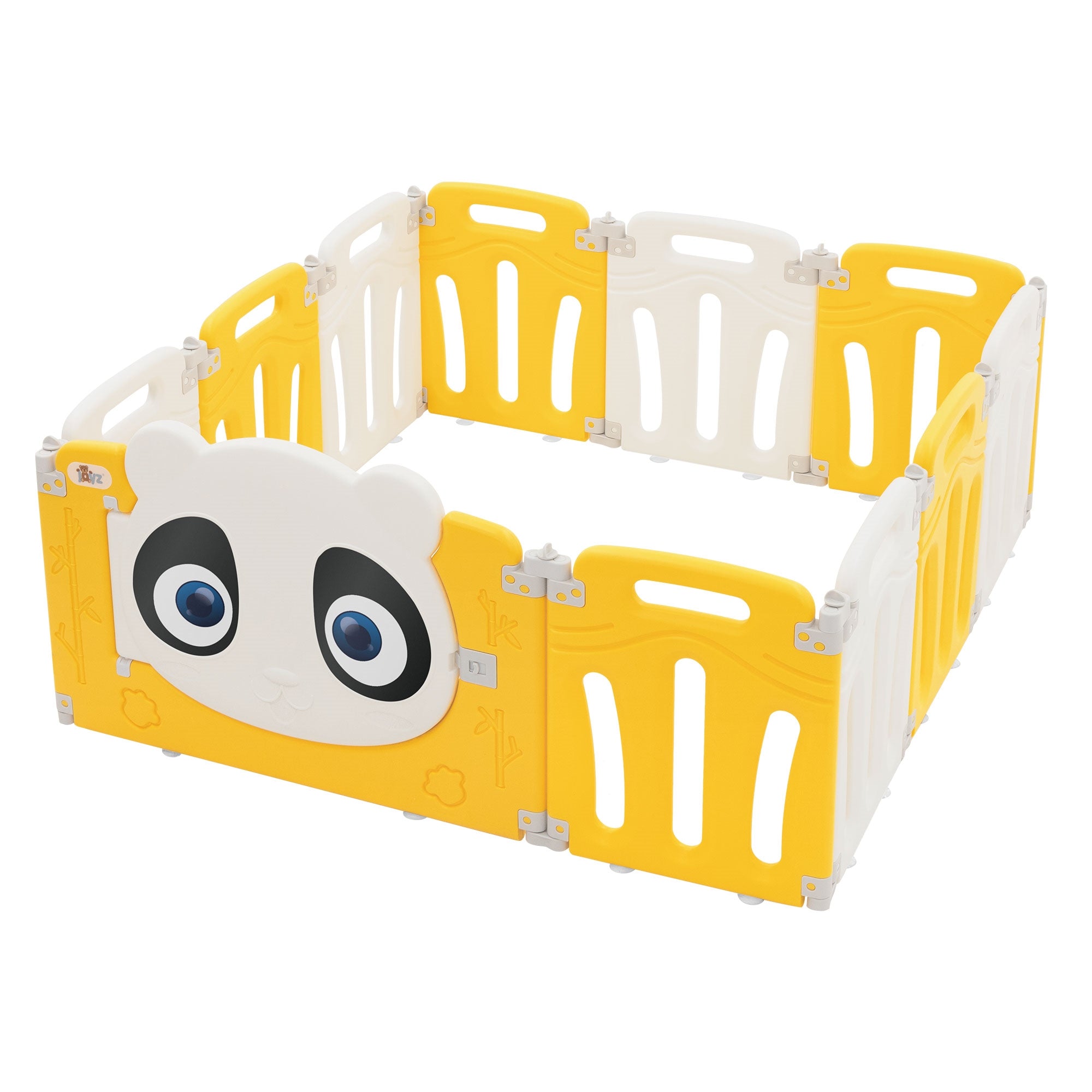
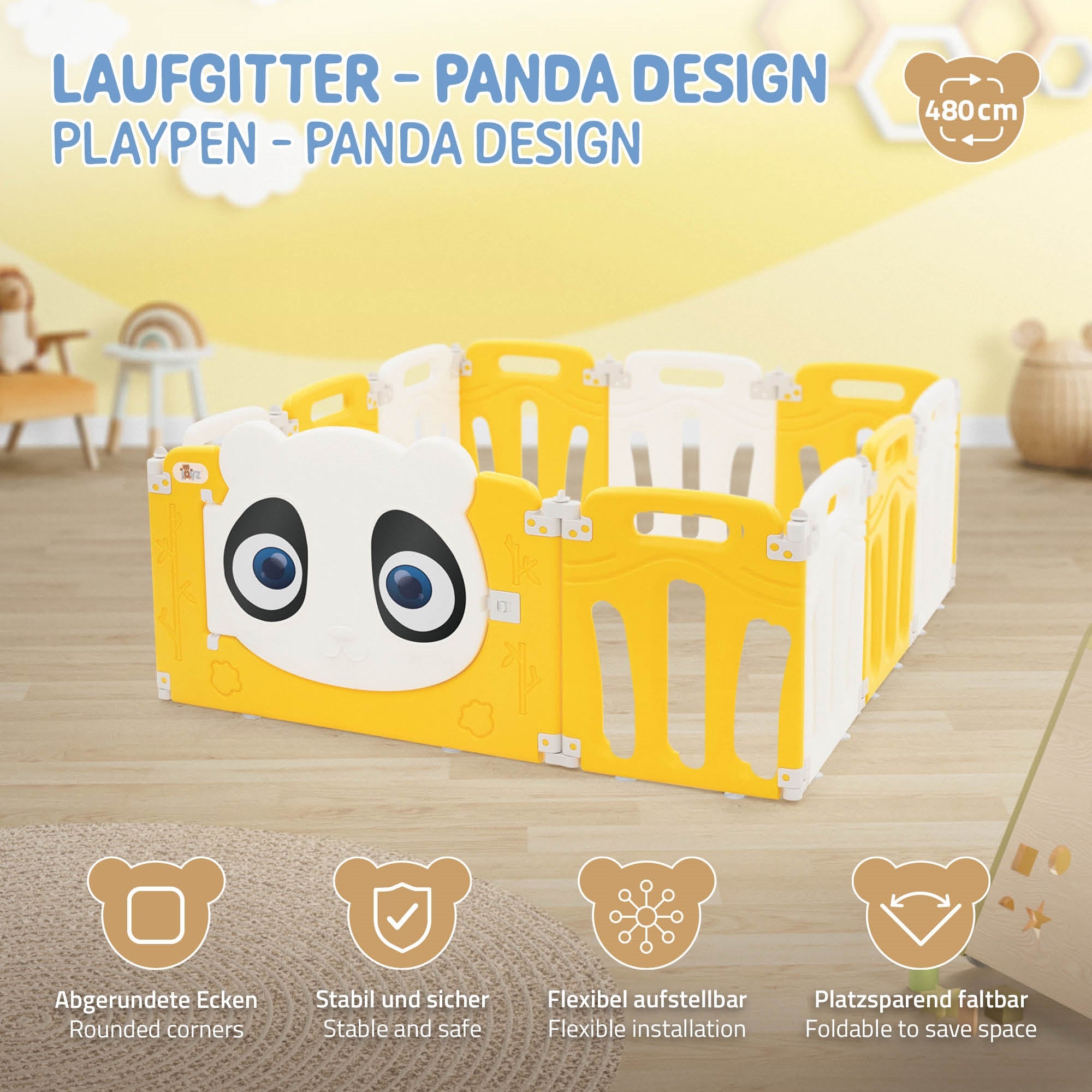
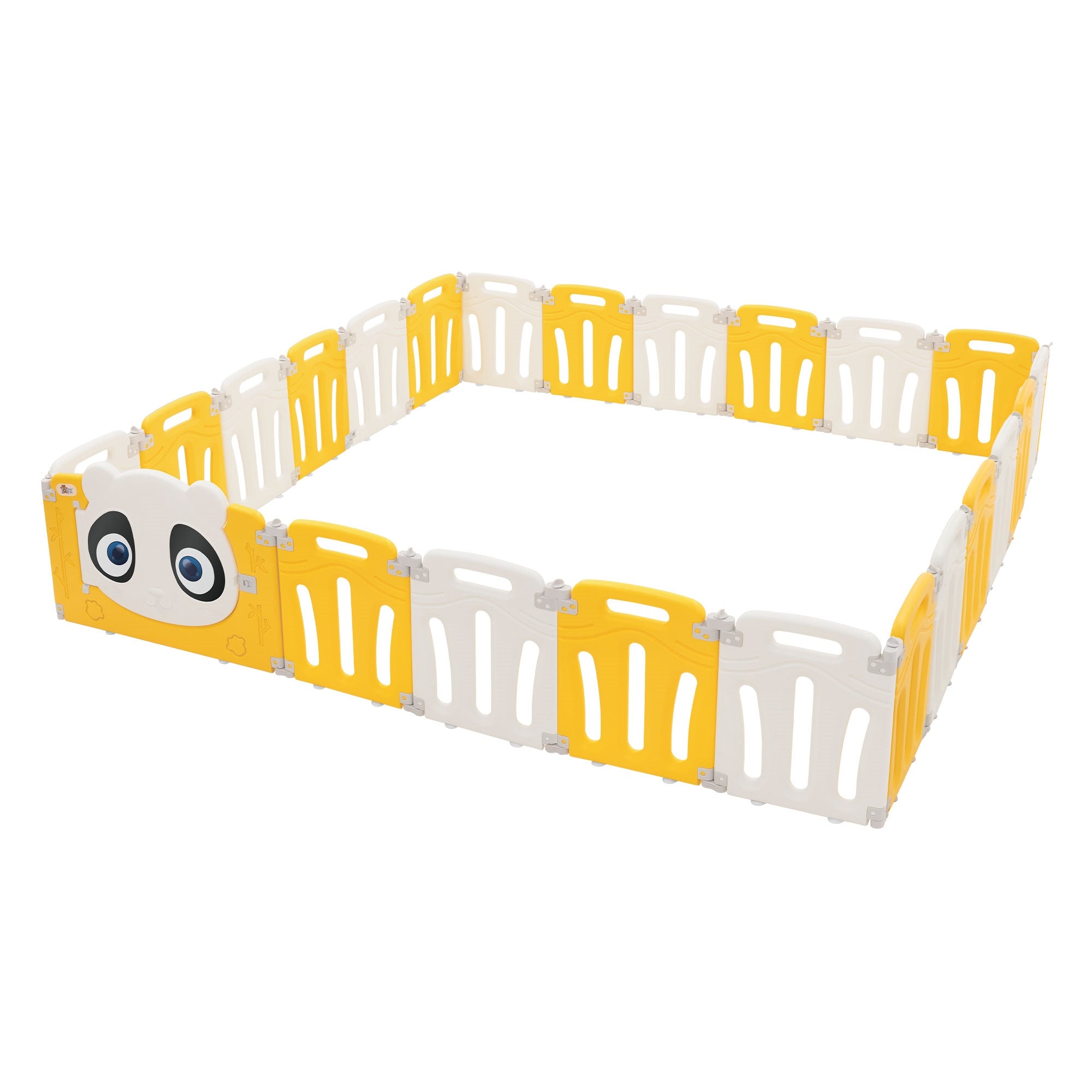
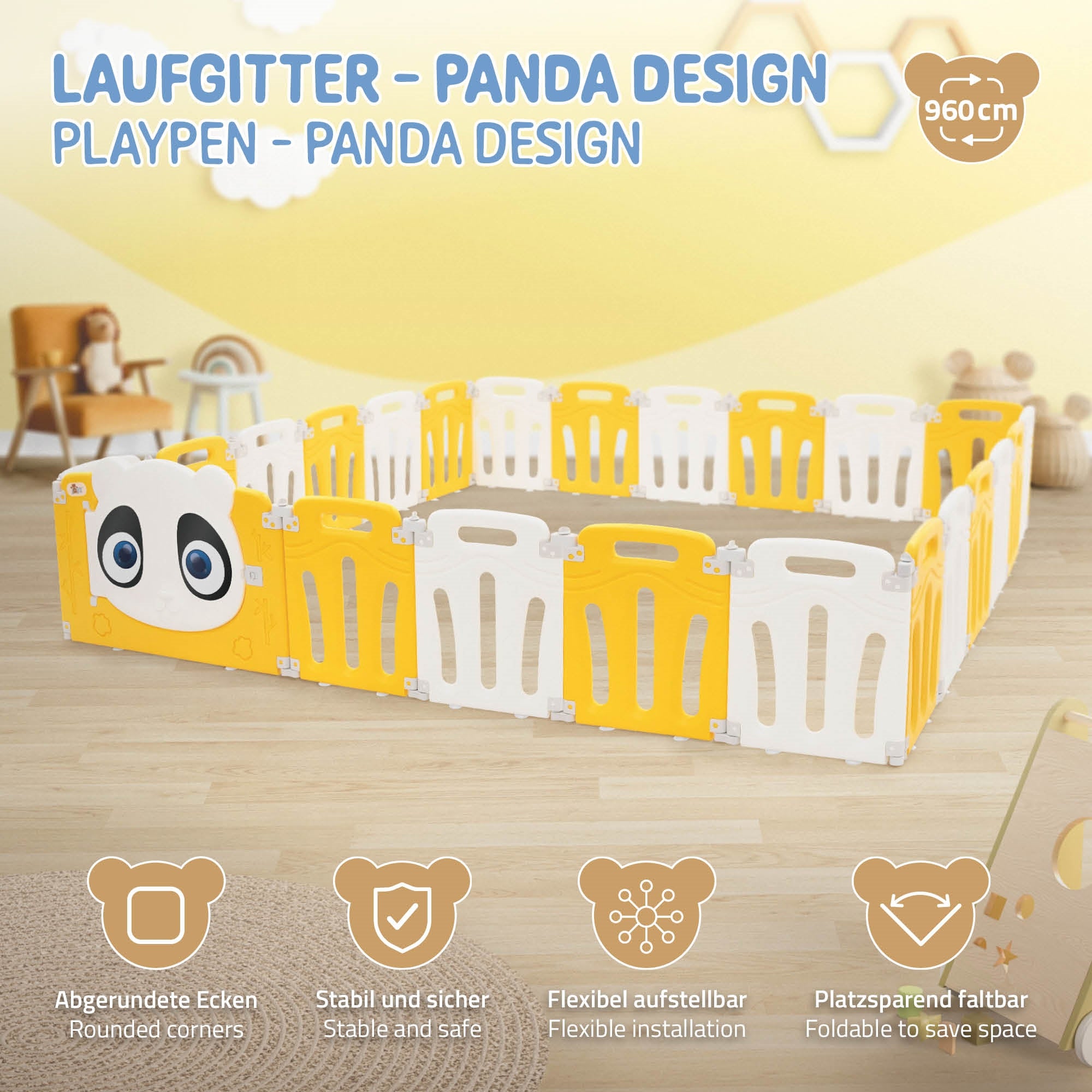
Playpen – a safe and practical place for babies
A playpen can create a protected area in everyday life with a baby, where the child can stay, move, and play temporarily. Especially when parents need both hands free for a moment, a playpen for babies can be a practical addition to the home.
When choosing, especially safety, size, material, features, stability, and space requirements play an important role. At the same time, a playpen should not be understood as a permanent place to stay. Babies need sufficient opportunities to move freely and explore their surroundings under supervision.
How big should a playpen be?
The appropriate size mainly depends on the available space and how the playpen is to be used. A larger model offers the baby more freedom of movement and can also provide enough space for toys or a suitable play mat. Compact playpens, on the other hand, are particularly suitable for smaller apartments or rooms where only limited floor space is available.
When choosing, the following points can be considered:
- available floor space
- freedom of movement of the baby
- shape of the playpen
- height of the side walls
- size of the lying or floor area
- possibility for later use
A too small playpen can unnecessarily restrict freedom of movement. Therefore, one should not only look for the smallest available model.
Are playpens safe for babies?
A high-quality and correctly assembled playpen can create a defined play and stay area. However, it is crucial that the model is stably constructed and used according to the manufacturer's instructions.
Important safety features include:
- stable construction
- stable feet
- sufficiently high side walls
- secure locks
- no sharp edges
- no dangerous openings or gaps
- robust and well-processed materials
The playpen itself should also be checked regularly. Loose connections, damaged grid elements, or defective locks should not be ignored. A playpen also does not replace supervision by adults. Especially mobile babies can quickly develop and learn new skills. Therefore, the environment should be regularly adjusted to the child's developmental stage.
Where should a playpen be set up?
The location is particularly important for safety and practicality. The playpen should stand on a level and stable surface and have sufficient distance from potentially dangerous objects. A suitable area could be, for example, a space in the living room where parents can keep a good eye on the baby.
In contrast, places in immediate proximity to:
- heaters
- open windows
- stairs
- cables
- freely accessible sockets
- hot surfaces
- unstable furniture
- dangling strings or cords
Furniture or objects that the baby could reach from the playpen should also be taken into account.
Is a playpen sensible for the baby's development?
A playpen can be a sensible addition to a baby's daily life, but it should not be the only environment in which the child moves.Grasping, rolling, crawling, pulling up, and exploring. For this, they need sufficient opportunities to move freely and gather different experiences.
A playpen can create a limited, manageable area where the baby can play under supervision and explore its surroundings. Therefore, a balanced use is especially sensible for development: The playpen can be used temporarily, while the baby also has sufficient opportunities for free movement and age-appropriate play outside of it.
Playpen or play yard – is there a difference?
The terms playpen, play yard and baby play yard are often used synonymously in everyday life. It usually refers to a defined area where a baby or toddler can stay temporarily.
Differences are more likely to be found in the respective design and equipment. Some models consist of individual grid elements, while others have a solid base or additional play elements. Therefore, when purchasing, one should pay less attention to the designation and more to the actual properties of the product.
Which materials are suitable for playpens?
Playpens can be made from different materials. Particularly common are wood, plastic, or combinations of various materials. Wood offers a stable and classic construction and often visually fits well into living spaces. When choosing a wooden playpen, attention should be paid to well-finished surfaces and rounded edges.
Plastic can be easy to clean and is sometimes used in particularly mobile or modular models. Regardless of the material, solid workmanship and safe construction are more important than the choice of material alone.
What features are useful in a playpen?
Depending on the model, a playpen can be equipped differently. Which functions are actually useful depends on the age of the baby and the intended use.
Practical features may include:
- padded or suitable floor
- removable floor mat
- wheels with secure locking mechanism
- height-adjustable floor
- foldable construction
- additional play elements
- door or entry option
With any additional features, care should be taken to ensure that they are securely attached and do not pose additional dangers to the baby.
Playpens with wheels
Wheels can be practical if the playpen needs to be moved to another location occasionally. Especially in larger living spaces, this can make daily life easier. However, it is important that the wheels can be securely locked. The playpen must not shift unintentionally during use.
Therefore, before purchasing, it should be checked how the locking function works and whether the model stands securely on the existing floor.
Playpen for small apartments
A playpen can also be useful in smaller apartments. Compact or foldable models are particularly suitable here. Before purchasing, the available space should be measured accurately.
In doing so, not only the footprint of the playpen should be considered, but also sufficient space for movement around it. A foldable model can be stored space-saving after use and is therefore particularly suitable for rooms that are not permanently used as a baby area.
Playpen in everyday life
A playpen can support parents in everyday life when, for example, cooking, tidying up, or completing another task briefly. The baby can play in a designated area for a limited time.
However, the playpen should not serve as a substitute for shared activities or free movement. The more mobile a baby becomes, the more important a safe environment outside the playpen is. As soon as the child begins to pull itself up or reach for objects intentionally, the entire room should be checked accordingly.
Safety around the playpen
Safety does not end with the construction of the playpen. The equipment and the environment also play an important role. There should be no objects in the playpen that the baby could injure itself on or get caught in.
Toys should be age-appropriate and regularly checked for damage. Additionally, the baby should not be left unattended on elevated or unsuitable surfaces within the playpen.Manufacturer specifications regardingage, weight, maximum load, and permitted use
should always be observed.
How long can a baby use a playpen?
The duration of use depends on the respective model and especially on the child's development. Not only the age is decisive. As soon as a child, for example, tries to climb over the side walls or leave the playpen, the previous use may become unsuitable.
Therefore, the manufacturer's specifications and the child's individual abilities should be considered together. A playpen should only be used as long as the child is safely contained in it and the construction meets the intended requirements.
Playpen as a play area
With suitable equipment, a playpen can also serve as a small play area. Age-appropriate toys, grasping toys, or other suitable activities can provide the baby with incentives to play and explore.
Playpen from JOYZ
JOYZoffers products for babies and children that can practically and child-friendly complement family life. A playpen can create a designated area for temporary play and stay.
When selecting, parents should particularly pay attention to stability, size, workmanship, secure locks, and appropriate equipmentWhat size and equipment are sensible depends on the available space, the child's age, and the intended area of use.
Conclusion: The right playpen for everyday life with a baby
A playpen can be a practical addition for families and create a manageable area for playing and temporary stays.
Especially important are a stable construction, sufficient freedom of movement, safe side walls, and a suitable location. The equipment and the environment around the playpen should also be adapted to the child's developmental stage.
For a child's development, the playpen should only be a part of everyday life. Babies also need sufficient opportunities for free movement, play, and exploring their surroundings under appropriate supervision.
Those who pay attention to size, safety, material, equipment, stability, and value for money can find a playpen that fits sensibly into their own family life.


Playpen – a safe and practical place for babies
A playpen can create a protected area in everyday life with a baby, where the child can stay, move, and play temporarily. Especially when parents need both hands free for a moment, a playpen for babies can be a practical addition to the home.
When choosing, especially safety, size, material, features, stability, and space requirements play an important role. At the same time, a playpen should not be understood as a permanent place to stay. Babies need sufficient opportunities to move freely and explore their surroundings under supervision.
How big should a playpen be?
The appropriate size mainly depends on the available space and how the playpen is to be used. A larger model offers the baby more freedom of movement and can also provide enough space for toys or a suitable play mat. Compact playpens, on the other hand, are particularly suitable for smaller apartments or rooms where only limited floor space is available.
When choosing, the following points can be considered:
- available floor space
- freedom of movement of the baby
- shape of the playpen
- height of the side walls
- size of the lying or floor area
- possibility for later use
A too small playpen can unnecessarily restrict freedom of movement. Therefore, one should not only look for the smallest available model.
Are playpens safe for babies?
A high-quality and correctly assembled playpen can create a defined play and stay area. However, it is crucial that the model is stably constructed and used according to the manufacturer's instructions.
Important safety features include:
- stable construction
- stable feet
- sufficiently high side walls
- secure locks
- no sharp edges
- no dangerous openings or gaps
- robust and well-processed materials
The playpen itself should also be checked regularly. Loose connections, damaged grid elements, or defective locks should not be ignored. A playpen also does not replace supervision by adults. Especially mobile babies can quickly develop and learn new skills. Therefore, the environment should be regularly adjusted to the child's developmental stage.
Where should a playpen be set up?
The location is particularly important for safety and practicality. The playpen should stand on a level and stable surface and have sufficient distance from potentially dangerous objects. A suitable area could be, for example, a space in the living room where parents can keep a good eye on the baby.
In contrast, places in immediate proximity to:
- heaters
- open windows
- stairs
- cables
- freely accessible sockets
- hot surfaces
- unstable furniture
- dangling strings or cords
Furniture or objects that the baby could reach from the playpen should also be taken into account.
Is a playpen sensible for the baby's development?
A playpen can be a sensible addition to a baby's daily life, but it should not be the only environment in which the child moves.Grasping, rolling, crawling, pulling up, and exploring. For this, they need sufficient opportunities to move freely and gather different experiences.
A playpen can create a limited, manageable area where the baby can play under supervision and explore its surroundings. Therefore, a balanced use is especially sensible for development: The playpen can be used temporarily, while the baby also has sufficient opportunities for free movement and age-appropriate play outside of it.
Playpen or play yard – is there a difference?
The terms playpen, play yard and baby play yard are often used synonymously in everyday life. It usually refers to a defined area where a baby or toddler can stay temporarily.
Differences are more likely to be found in the respective design and equipment. Some models consist of individual grid elements, while others have a solid base or additional play elements. Therefore, when purchasing, one should pay less attention to the designation and more to the actual properties of the product.
Which materials are suitable for playpens?
Playpens can be made from different materials. Particularly common are wood, plastic, or combinations of various materials. Wood offers a stable and classic construction and often visually fits well into living spaces. When choosing a wooden playpen, attention should be paid to well-finished surfaces and rounded edges.
Plastic can be easy to clean and is sometimes used in particularly mobile or modular models. Regardless of the material, solid workmanship and safe construction are more important than the choice of material alone.
What features are useful in a playpen?
Depending on the model, a playpen can be equipped differently. Which functions are actually useful depends on the age of the baby and the intended use.
Practical features may include:
- padded or suitable floor
- removable floor mat
- wheels with secure locking mechanism
- height-adjustable floor
- foldable construction
- additional play elements
- door or entry option
With any additional features, care should be taken to ensure that they are securely attached and do not pose additional dangers to the baby.
Playpens with wheels
Wheels can be practical if the playpen needs to be moved to another location occasionally. Especially in larger living spaces, this can make daily life easier. However, it is important that the wheels can be securely locked. The playpen must not shift unintentionally during use.
Therefore, before purchasing, it should be checked how the locking function works and whether the model stands securely on the existing floor.
Playpen for small apartments
A playpen can also be useful in smaller apartments. Compact or foldable models are particularly suitable here. Before purchasing, the available space should be measured accurately.
In doing so, not only the footprint of the playpen should be considered, but also sufficient space for movement around it. A foldable model can be stored space-saving after use and is therefore particularly suitable for rooms that are not permanently used as a baby area.
Playpen in everyday life
A playpen can support parents in everyday life when, for example, cooking, tidying up, or completing another task briefly. The baby can play in a designated area for a limited time.
However, the playpen should not serve as a substitute for shared activities or free movement. The more mobile a baby becomes, the more important a safe environment outside the playpen is. As soon as the child begins to pull itself up or reach for objects intentionally, the entire room should be checked accordingly.
Safety around the playpen
Safety does not end with the construction of the playpen. The equipment and the environment also play an important role. There should be no objects in the playpen that the baby could injure itself on or get caught in.
Toys should be age-appropriate and regularly checked for damage. Additionally, the baby should not be left unattended on elevated or unsuitable surfaces within the playpen.Manufacturer specifications regardingage, weight, maximum load, and permitted use
should always be observed.
How long can a baby use a playpen?
The duration of use depends on the respective model and especially on the child's development. Not only the age is decisive. As soon as a child, for example, tries to climb over the side walls or leave the playpen, the previous use may become unsuitable.
Therefore, the manufacturer's specifications and the child's individual abilities should be considered together. A playpen should only be used as long as the child is safely contained in it and the construction meets the intended requirements.
Playpen as a play area
With suitable equipment, a playpen can also serve as a small play area. Age-appropriate toys, grasping toys, or other suitable activities can provide the baby with incentives to play and explore.
Playpen from JOYZ
JOYZoffers products for babies and children that can practically and child-friendly complement family life. A playpen can create a designated area for temporary play and stay.
When selecting, parents should particularly pay attention to stability, size, workmanship, secure locks, and appropriate equipmentWhat size and equipment are sensible depends on the available space, the child's age, and the intended area of use.
Conclusion: The right playpen for everyday life with a baby
A playpen can be a practical addition for families and create a manageable area for playing and temporary stays.
Especially important are a stable construction, sufficient freedom of movement, safe side walls, and a suitable location. The equipment and the environment around the playpen should also be adapted to the child's developmental stage.
For a child's development, the playpen should only be a part of everyday life. Babies also need sufficient opportunities for free movement, play, and exploring their surroundings under appropriate supervision.
Those who pay attention to size, safety, material, equipment, stability, and value for money can find a playpen that fits sensibly into their own family life.
Find even more among our top sellers







Popular categories


