


Easel – find the suitable easel for creative projects
An Easel is an important part of the workspace for many artists. It holds the canvas or painting surface in a suitable position, allowing for comfortable work. Whether painting with acrylic or oil paints, drawing, or engaging in creative hobby projects: Depending on the area of use, different types of easels are suitable. Particularly important are size, height, stability, material, adjustability, and space requirements. For beginners, a simple and flexible easel can be sensible, while experienced artists may have specific requirements for construction and adjustability. With a suitable easel from ECD Germany a personalized painting space can be set up both at home and in other creative environments.
Which easel is suitable for beginners?
For beginners, an easel that is easy to set up, stable, and versatile is particularly practical. Models that can adjust in height or support different canvas sizes are especially useful. Those who want to try out which painting techniques and formats are preferred do not necessarily have to start with a professional studio easel. A good beginner easel should:
- stand stable
- be easy to use
- be sufficiently adjustable
- match the used painting format
- provide enough space for the canvas
- be easy to store
For smaller painting projects, a table easel can be interesting. Those who want to use larger canvases are often more flexible with a standing easel.
What is better: table easel or standing easel?
The choice between a table easel and a standing easel mainly depends on the available space and the desired painting format. A table easel is set up on a table or another stable surface. It requires little space and is particularly suitable for smaller canvases, drawings, and creative work at home. A standing easel stands independently on the floor and usually offers more space for larger painting surfaces. It can also provide a more comfortable working height.
| table easel | standing easel |
|---|---|
| Compact and space-saving | Requires more floor space |
| Suitable for smaller formats | Also suitable for larger canvases |
| Easy to store | Permanent own workspace possible |
| Ideal for table or desk | More flexible in the studio or hobby room |
| Often easy to transport | Usually larger and heavier |
For small apartments or occasional creative projects, a table easel can be the more practical choice. Those who work regularly and on larger formats benefit more from a standing easel.
What types of easels are there?
Easels differ not only in size but also in construction and area of use.
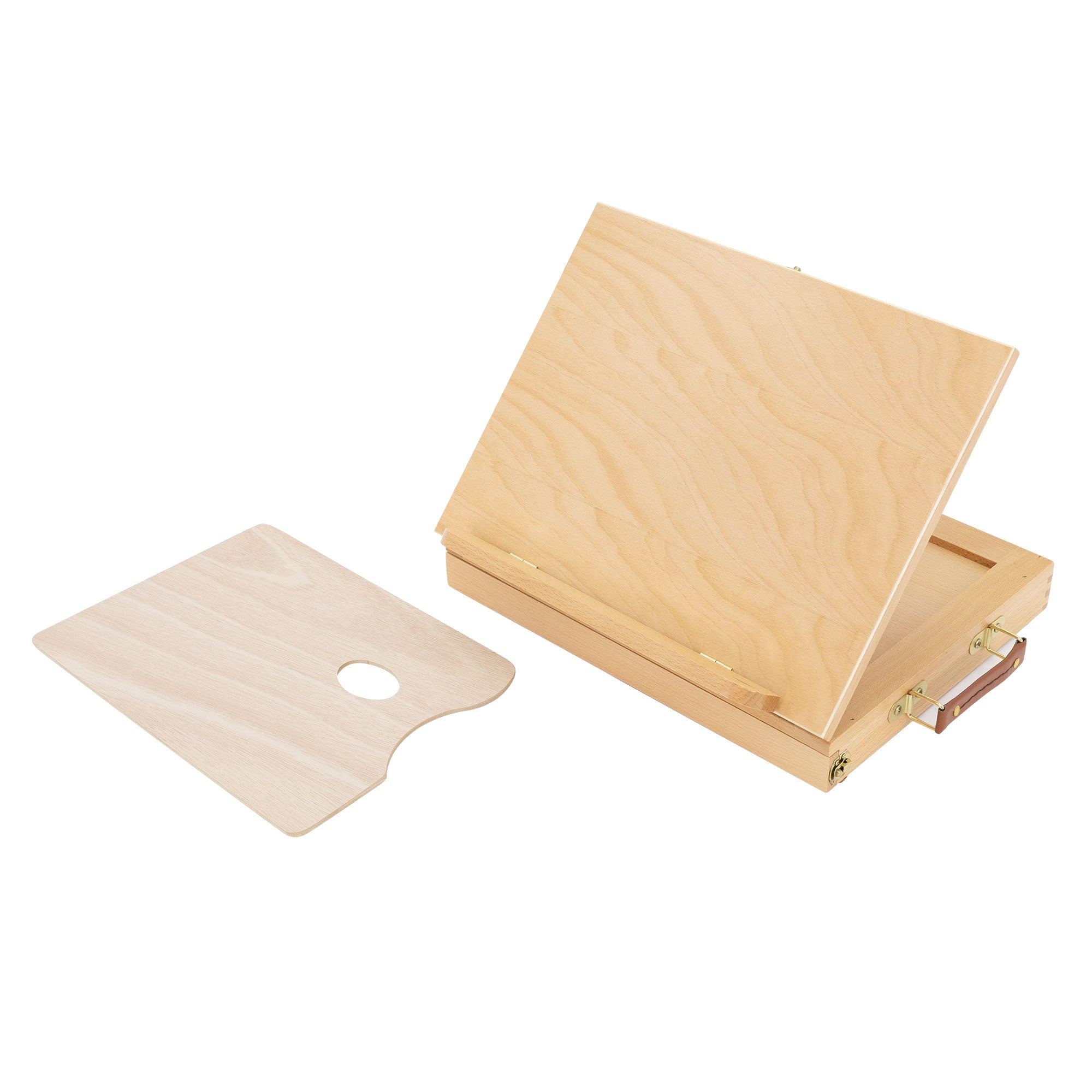
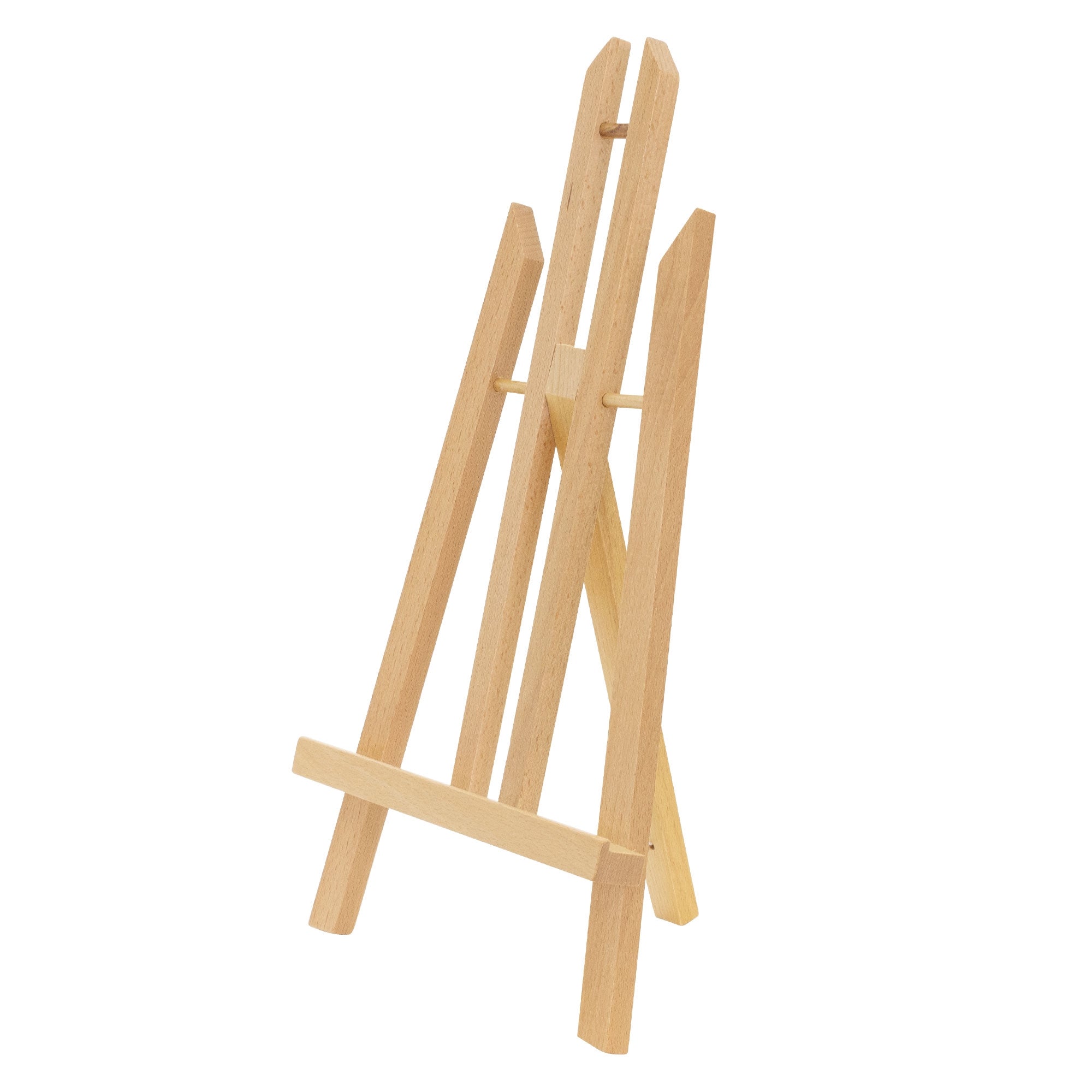
Table easel
Table easels are compact and are set up on a suitable work surface. They are particularly suitable for small canvases and drawings.Standing easel
Standing easels stand on their own legs and often offer more adjustment options. They are interesting for larger canvases and regular work.Studio easel
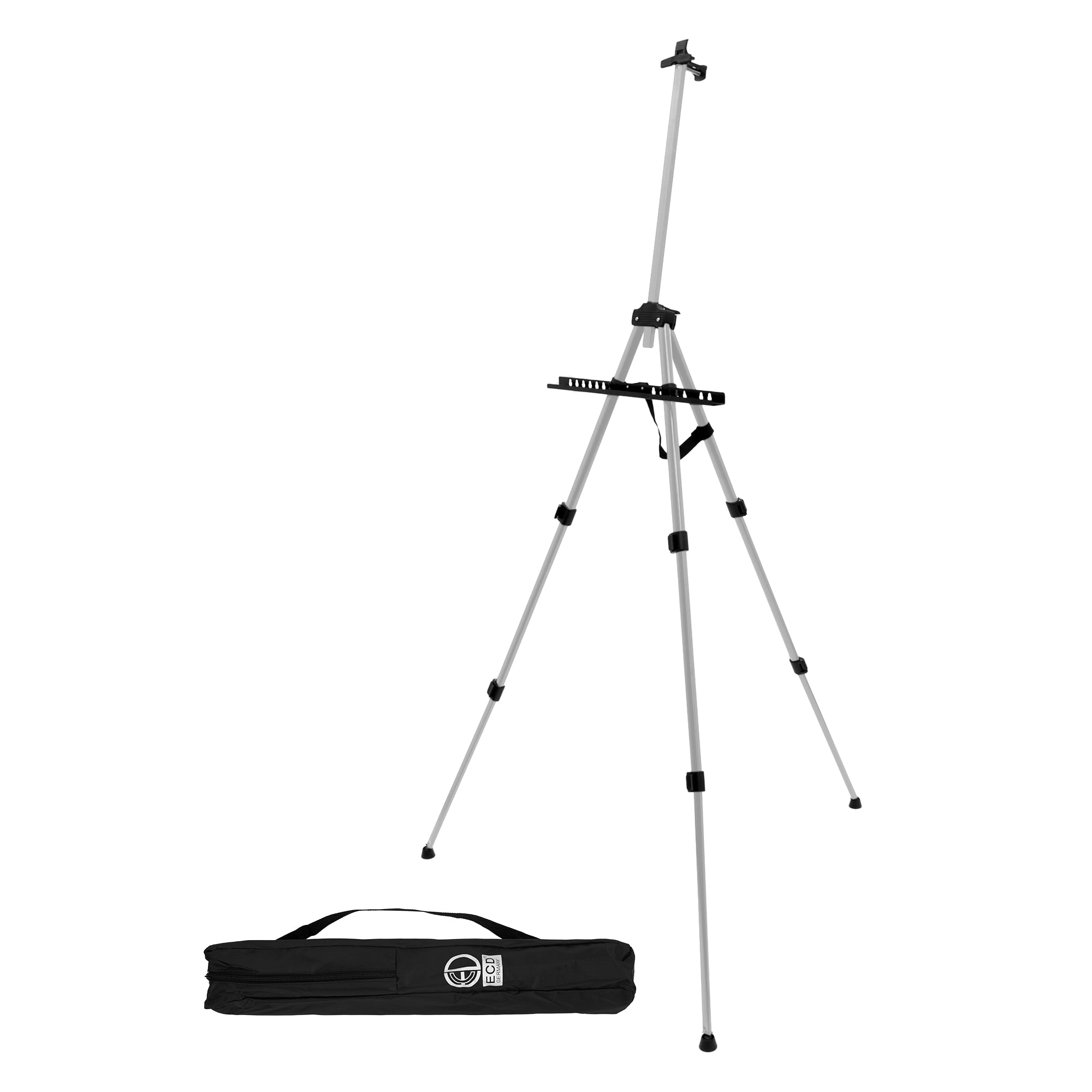
Studio easels are usually particularly stable and designed for larger painting formats. They require correspondingly more space.Field easel
Field easels are designed for mobility and can be interesting for painting outdoors, for example.Easel ladder
An easel ladder combines the function of an easel with a ladder or an elevated structure. Depending on the construction, it can be used for creative work and as a practical addition in the workspace.Which easel is suitable for acrylic and oil paints?
In principle, both a acrylic and an oil paint technique can be practiced on a suitable easel. The decisive factor is less the paint than the format used and the weight of the painting surface. Acrylic paints are often used for canvases of various sizes. For a heavy or large canvas, a correspondingly stable easel is important. Oil paints can also be processed on easels. Since artists sometimes work on the painting for longer periods with larger formats, a stable construction can be particularly pleasant. When selecting, it should therefore be especially noted that the easel can safely accommodate the desired format and weight of the canvas safely.
What should you consider when buying an easel?
When buying, several criteria should be considered. The best easel is not necessarily the largest or most expensive, but the one that fits the personal area of use. Important purchase criteria are:
- Size
- Working height
- Adjustability
- maximum canvas size
- Stability
- Material
- Weight
- Stability on the ground
- Transport options
- Space requirements
- Price-performance ratio
For example, someone who mainly paints small pictures does not need a particularly large studio easel. Conversely, a small table easel may be unsuitable if large canvases are regularly used.
What height should an easel have?
The ideal height depends on the user's height and preferred working method. An adjustable easel offers a significant advantage here. The canvas should be positioned so that it can be worked on comfortably without adopting an unfavorable posture for an extended period. Especially during longer painting sessions, a suitable working height can significantly improve comfort. With a table easel, the working height is additionally influenced by the table used.
How stable should an easel be?
An easel should be stable enough to securely hold the canvas and painting surface. The larger and heavier the canvas, the more important a stable construction becomes. Additionally, movements occur while painting due to brushes or other tools. The easel should ideally not wobble significantly with every touch. Especially for large canvases, it is worth paying attention to a solid construction and sufficiently wide or stable bases.
Easel made of wood or metal?
Easels are often made of Wood or metalWooden easels are particularly popular due to their natural appearance and fit well into living spaces or studios. Depending on the construction, they can be both robust and durable. Metal easels can also be stable and are sometimes particularly practical when a lightweight or mobile construction is desired. Which material is better suited therefore depends on the intended use, weight, and personal taste.
Easel for small spaces
Those with limited space should pay particular attention to dimensions and storage options. A table easel can be a good solution here. After painting, it can be removed from the table and stored in a relatively space-saving manner. A foldable standing easel can also be interesting if larger canvases are to be used, but the easel should not remain permanently in the room.
Easel for hobby artists
For hobby artists, an easel does not necessarily have to meet professional studio requirements. Much more important is that it fits the preferred painting style and the canvas sizes used. Those who want to try out different techniques benefit from a flexible easel with various adjustment options. Especially for beginners, a versatile model can be more sensible than a very specialized easel.
Easel ladder as a practical addition
A easel ladder can be interesting if the classic function of an easel is to be combined with additional practical uses. Depending on the model and construction, it can be used, for example, for creative work or activities at greater heights. Particular attention should be paid to stability and the intended usage options. An easel ladder should only be used according to the manufacturer's specifications.
The right easel for different painting formats
The size of the canvas should always be considered when making a selection. For small canvases and paper works, a compact table easel is often sufficient. Medium formats can be worked on with many classic standing easels. For particularly large canvases, however, a correspondingly stable model should be chosen that is designed for the respective format. Therefore, it is worth taking a look at the maximum supported canvas size.
Easel from ECD Germany
An easel from ECD Germany can be a practical basis for creative projects at home, in the hobby room, or studio. Depending on the model, different requirements for size, construction, and use can be met. For beginners and hobby artists, a combination of stability, ease of use, and sensible adjustabilityinteresting. Anyone choosing an easel should first consider which canvas formats and painting techniques will primarily be used.
Conclusion: Which easel is right for me?
The suitable easel mainly depends on the format of the painting, available space, area of use, and personal working style. A table easel is particularly suitable for smaller works and cramped spaces. A standing easel offers more flexibility for larger canvases and a fixed painting area. Different types of easels are generally suitable for acrylic and oil paints. It is crucial that the construction is stable enough for the respective format and weight of the painting surface. Anyone comparing size, stability, material, adjustability, maximum canvas size, and price-performance ratio can more easily find a model that fits their long-term creative hobby. Discover easels from ECD Germany and find a suitable foundation for your next painting and drawing projects.



Easel – find the suitable easel for creative projects
An Easel is an important part of the workspace for many artists. It holds the canvas or painting surface in a suitable position, allowing for comfortable work. Whether painting with acrylic or oil paints, drawing, or engaging in creative hobby projects: Depending on the area of use, different types of easels are suitable. Particularly important are size, height, stability, material, adjustability, and space requirements. For beginners, a simple and flexible easel can be sensible, while experienced artists may have specific requirements for construction and adjustability. With a suitable easel from ECD Germany a personalized painting space can be set up both at home and in other creative environments.
Which easel is suitable for beginners?
For beginners, an easel that is easy to set up, stable, and versatile is particularly practical. Models that can adjust in height or support different canvas sizes are especially useful. Those who want to try out which painting techniques and formats are preferred do not necessarily have to start with a professional studio easel. A good beginner easel should:
- stand stable
- be easy to use
- be sufficiently adjustable
- match the used painting format
- provide enough space for the canvas
- be easy to store
For smaller painting projects, a table easel can be interesting. Those who want to use larger canvases are often more flexible with a standing easel.
What is better: table easel or standing easel?
The choice between a table easel and a standing easel mainly depends on the available space and the desired painting format. A table easel is set up on a table or another stable surface. It requires little space and is particularly suitable for smaller canvases, drawings, and creative work at home. A standing easel stands independently on the floor and usually offers more space for larger painting surfaces. It can also provide a more comfortable working height.
| table easel | standing easel |
|---|---|
| Compact and space-saving | Requires more floor space |
| Suitable for smaller formats | Also suitable for larger canvases |
| Easy to store | Permanent own workspace possible |
| Ideal for table or desk | More flexible in the studio or hobby room |
| Often easy to transport | Usually larger and heavier |
For small apartments or occasional creative projects, a table easel can be the more practical choice. Those who work regularly and on larger formats benefit more from a standing easel.
What types of easels are there?
Easels differ not only in size but also in construction and area of use.
Table easel
Table easels are compact and are set up on a suitable work surface. They are particularly suitable for small canvases and drawings.Standing easel
Standing easels stand on their own legs and often offer more adjustment options. They are interesting for larger canvases and regular work.Studio easel
Studio easels are usually particularly stable and designed for larger painting formats. They require correspondingly more space.Field easel
Field easels are designed for mobility and can be interesting for painting outdoors, for example.Easel ladder
An easel ladder combines the function of an easel with a ladder or an elevated structure. Depending on the construction, it can be used for creative work and as a practical addition in the workspace.Which easel is suitable for acrylic and oil paints?
In principle, both a acrylic and an oil paint technique can be practiced on a suitable easel. The decisive factor is less the paint than the format used and the weight of the painting surface. Acrylic paints are often used for canvases of various sizes. For a heavy or large canvas, a correspondingly stable easel is important. Oil paints can also be processed on easels. Since artists sometimes work on the painting for longer periods with larger formats, a stable construction can be particularly pleasant. When selecting, it should therefore be especially noted that the easel can safely accommodate the desired format and weight of the canvas safely.
What should you consider when buying an easel?
When buying, several criteria should be considered. The best easel is not necessarily the largest or most expensive, but the one that fits the personal area of use. Important purchase criteria are:
- Size
- Working height
- Adjustability
- maximum canvas size
- Stability
- Material
- Weight
- Stability on the ground
- Transport options
- Space requirements
- Price-performance ratio
For example, someone who mainly paints small pictures does not need a particularly large studio easel. Conversely, a small table easel may be unsuitable if large canvases are regularly used.
What height should an easel have?
The ideal height depends on the user's height and preferred working method. An adjustable easel offers a significant advantage here. The canvas should be positioned so that it can be worked on comfortably without adopting an unfavorable posture for an extended period. Especially during longer painting sessions, a suitable working height can significantly improve comfort. With a table easel, the working height is additionally influenced by the table used.
How stable should an easel be?
An easel should be stable enough to securely hold the canvas and painting surface. The larger and heavier the canvas, the more important a stable construction becomes. Additionally, movements occur while painting due to brushes or other tools. The easel should ideally not wobble significantly with every touch. Especially for large canvases, it is worth paying attention to a solid construction and sufficiently wide or stable bases.
Easel made of wood or metal?
Easels are often made of Wood or metalWooden easels are particularly popular due to their natural appearance and fit well into living spaces or studios. Depending on the construction, they can be both robust and durable. Metal easels can also be stable and are sometimes particularly practical when a lightweight or mobile construction is desired. Which material is better suited therefore depends on the intended use, weight, and personal taste.
Easel for small spaces
Those with limited space should pay particular attention to dimensions and storage options. A table easel can be a good solution here. After painting, it can be removed from the table and stored in a relatively space-saving manner. A foldable standing easel can also be interesting if larger canvases are to be used, but the easel should not remain permanently in the room.
Easel for hobby artists
For hobby artists, an easel does not necessarily have to meet professional studio requirements. Much more important is that it fits the preferred painting style and the canvas sizes used. Those who want to try out different techniques benefit from a flexible easel with various adjustment options. Especially for beginners, a versatile model can be more sensible than a very specialized easel.
Easel ladder as a practical addition
A easel ladder can be interesting if the classic function of an easel is to be combined with additional practical uses. Depending on the model and construction, it can be used, for example, for creative work or activities at greater heights. Particular attention should be paid to stability and the intended usage options. An easel ladder should only be used according to the manufacturer's specifications.
The right easel for different painting formats
The size of the canvas should always be considered when making a selection. For small canvases and paper works, a compact table easel is often sufficient. Medium formats can be worked on with many classic standing easels. For particularly large canvases, however, a correspondingly stable model should be chosen that is designed for the respective format. Therefore, it is worth taking a look at the maximum supported canvas size.
Easel from ECD Germany
An easel from ECD Germany can be a practical basis for creative projects at home, in the hobby room, or studio. Depending on the model, different requirements for size, construction, and use can be met. For beginners and hobby artists, a combination of stability, ease of use, and sensible adjustabilityinteresting. Anyone choosing an easel should first consider which canvas formats and painting techniques will primarily be used.
Conclusion: Which easel is right for me?
The suitable easel mainly depends on the format of the painting, available space, area of use, and personal working style. A table easel is particularly suitable for smaller works and cramped spaces. A standing easel offers more flexibility for larger canvases and a fixed painting area. Different types of easels are generally suitable for acrylic and oil paints. It is crucial that the construction is stable enough for the respective format and weight of the painting surface. Anyone comparing size, stability, material, adjustability, maximum canvas size, and price-performance ratio can more easily find a model that fits their long-term creative hobby. Discover easels from ECD Germany and find a suitable foundation for your next painting and drawing projects.
Find even more among our top sellers









Popular categories


