


Wheelbarrows – the practical helper for gardening, construction and transport
Whether digging over the garden, transporting soil and compost, or moving sand, gravel and construction debris on a building site, a sturdy wheelbarrow makes many tasks considerably easier. At first glance, they may look like simple transport equipment, but models can differ significantly in load capacity, volume, material, tyres and handling.
The right wheelbarrow should therefore do more than simply carry as much as possible. What matters is that it suits your intended use and can be moved safely and under control, even when heavily loaded.
Key factors when choosing a wheelbarrow include load capacity and its own weight, capacity, tray material, tyres, frame, handles and overall build quality. Whether for a home garden, renovation work or professional use on a building site, the right model makes transporting heavy loads much easier.
What types of wheelbarrows are there?

Wheelbarrows differ primarily in their design and intended use. While lightweight garden models should be as easy to move as possible, construction wheelbarrows need to be more durable and stable.
Garden wheelbarrow – lightweight and versatile

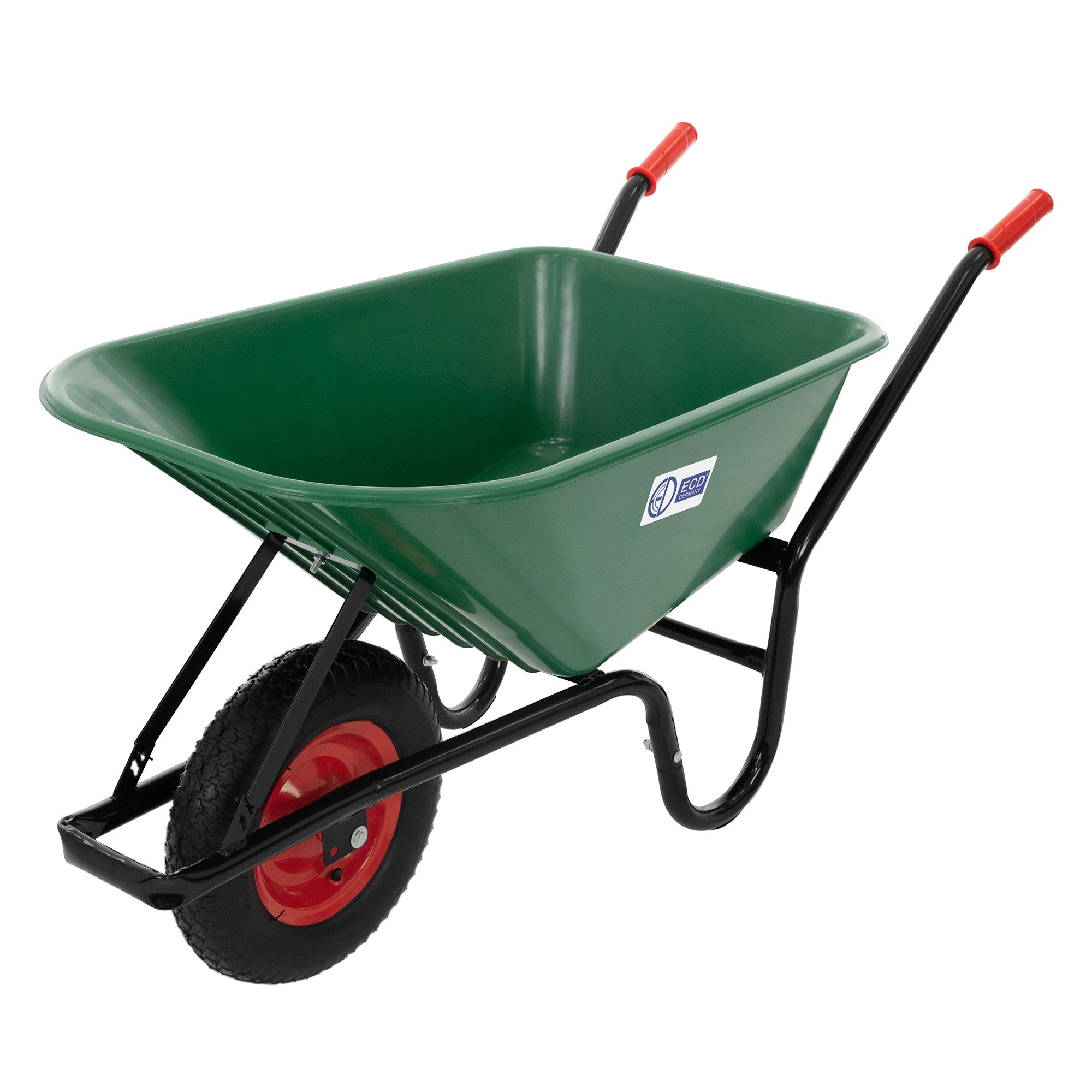
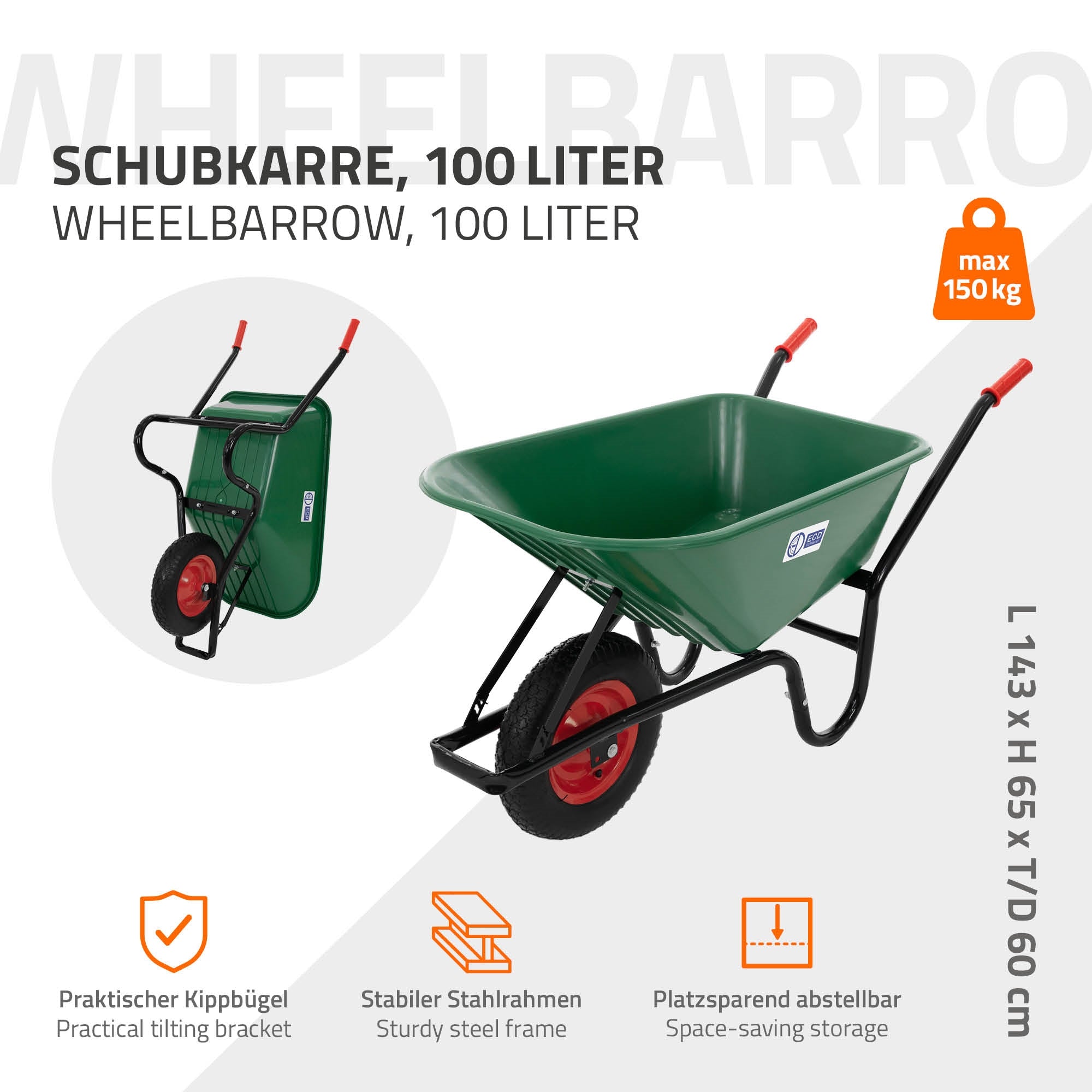
For typical gardening tasks, a lightweight wheelbarrow is often perfectly adequate. It is suitable for transporting soil, leaves, plants, branches, compost or gardening tools. Models with a capacity of around 80 to 120 litres are particularly practical. They offer enough space for most gardening tasks without becoming unnecessarily heavy and cumbersome.
- easy to push
- sufficiently manoeuvrable
- sturdy tray
- comfortable handles
- suitable for uneven surfaces
Construction wheelbarrow – sturdy for heavy loads

The demands are considerably higher on building sites. Sand, gravel, mortar, stones, soil and construction debris are often transported here. A sturdy construction and high load capacity are therefore particularly important. Heavy-duty construction wheelbarrows often feature reinforced steel trays and sturdy frames. Depending on the model, they can carry over 150 kg, making them suitable for heavy materials.
Which wheelbarrow is best?
There is no single best wheelbarrow for everyone – it depends on what you need to transport. For gardening, a lightweight model with a plastic tray can be especially convenient, while a heavy steel wheelbarrow comes into its own on a building site. When choosing, it is therefore worth considering the balance between load capacity, volume, the wheelbarrow’s own weight and manoeuvrability.
- sturdy, durable construction
- controlled movement, even when fully loaded
- stable footing
- high-quality handles
- suitable for the intended surface
How many kg can a wheelbarrow carry?
Load capacity depends greatly on the design, tub, frame and wheel suspension. Lightweight garden wheelbarrows are often designed to carry around 80 to 120 kg, while robust models for construction and transport work can carry 150 to 250 kg or more. It is important to observe the maximum load capacity of the respective model.
The heavier the load, the more the surface, centre of gravity and weight distribution affect handling. For everyday use, sufficient load capacity with a little extra margin is therefore usually more practical than constantly pushing the maximum weight to its limit.
Which wheelbarrow is best for gardening?
For gardening, lightweight and comfortable handling matters more than maximum load capacity. Soil, bark mulch, leaves or plants often need to be transported across lawns, gravel paths or uneven surfaces. A good garden wheelbarrow should therefore be as lightweight as possible while still having a sturdy tub. A capacity of around 80 to 120 litres is suitable for many typical gardening tasks.
- low dead weight
- sturdy plastic or steel container
- pneumatic tyre
- ergonomic handles
- good manoeuvrability
Which wheelbarrow is best for rubble and heavy loads?
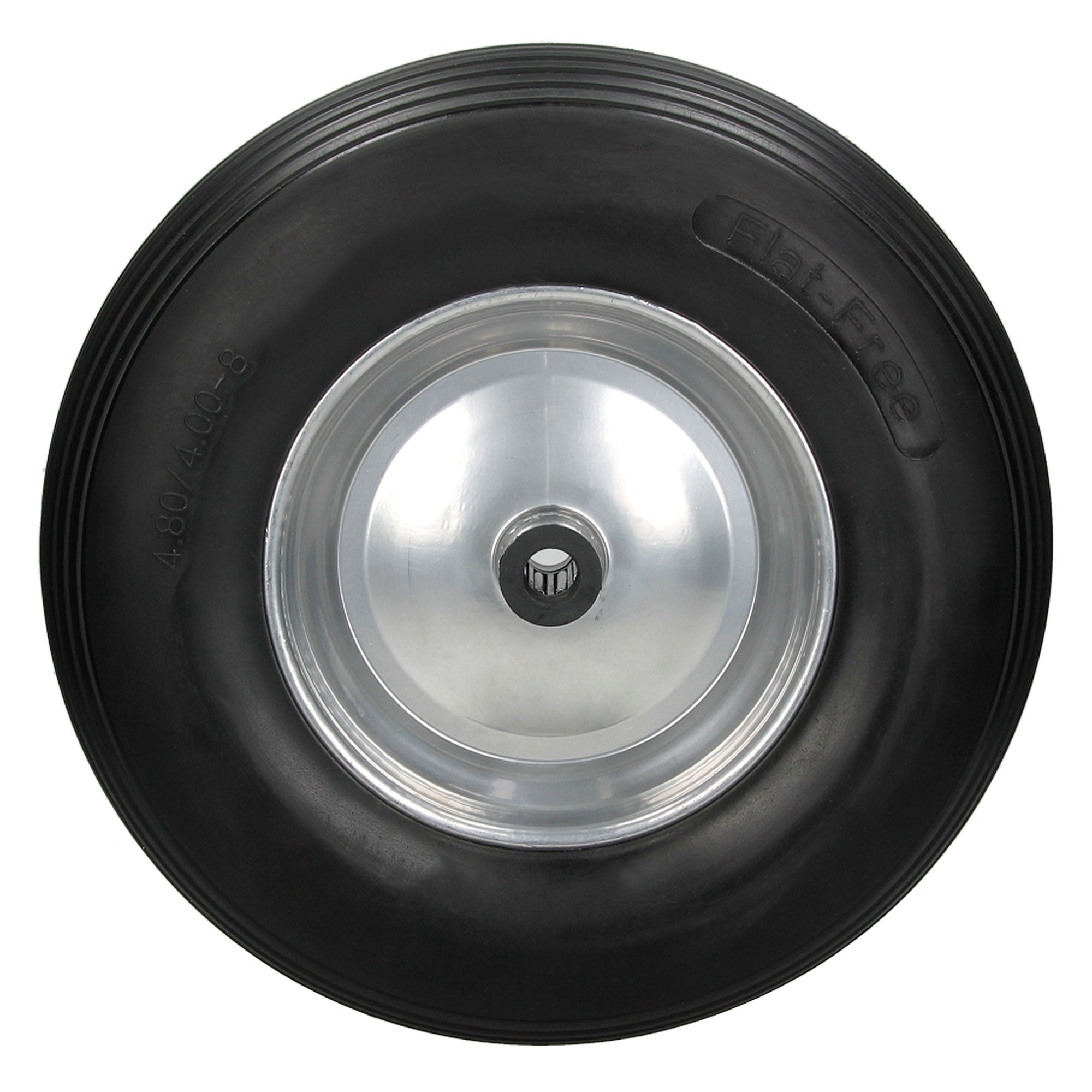
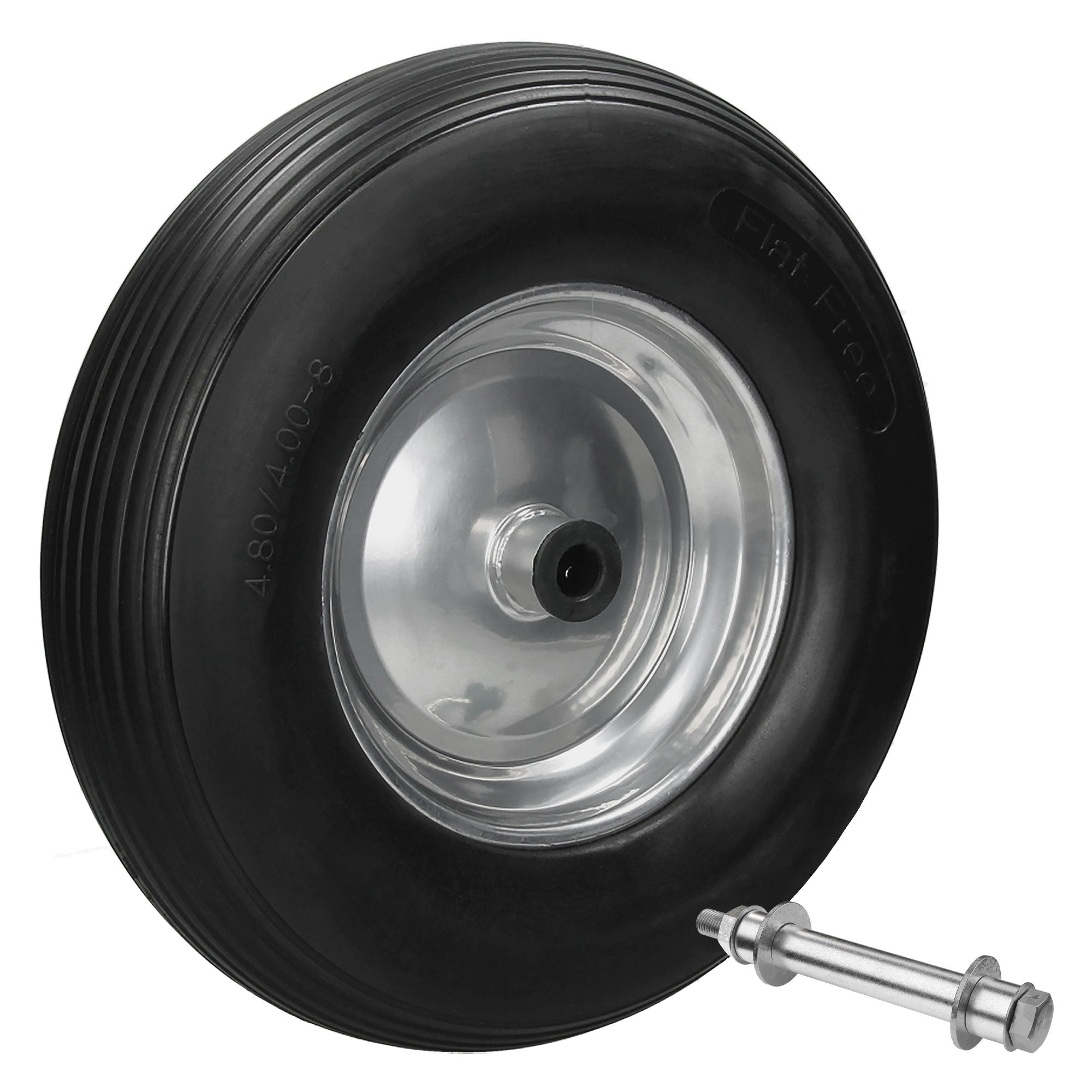
A particularly robust wheelbarrow is recommended for rubble, gravel, sand, stones or large quantities of soil. The key factors here are load capacity, tub stability and a sturdy frame. A steel tub is particularly resistant when carrying heavy and angular materials. A sturdy wheel with a durable axle is also important.
- sturdy steel tub
- reinforced frame
- high load capacity
- large capacity
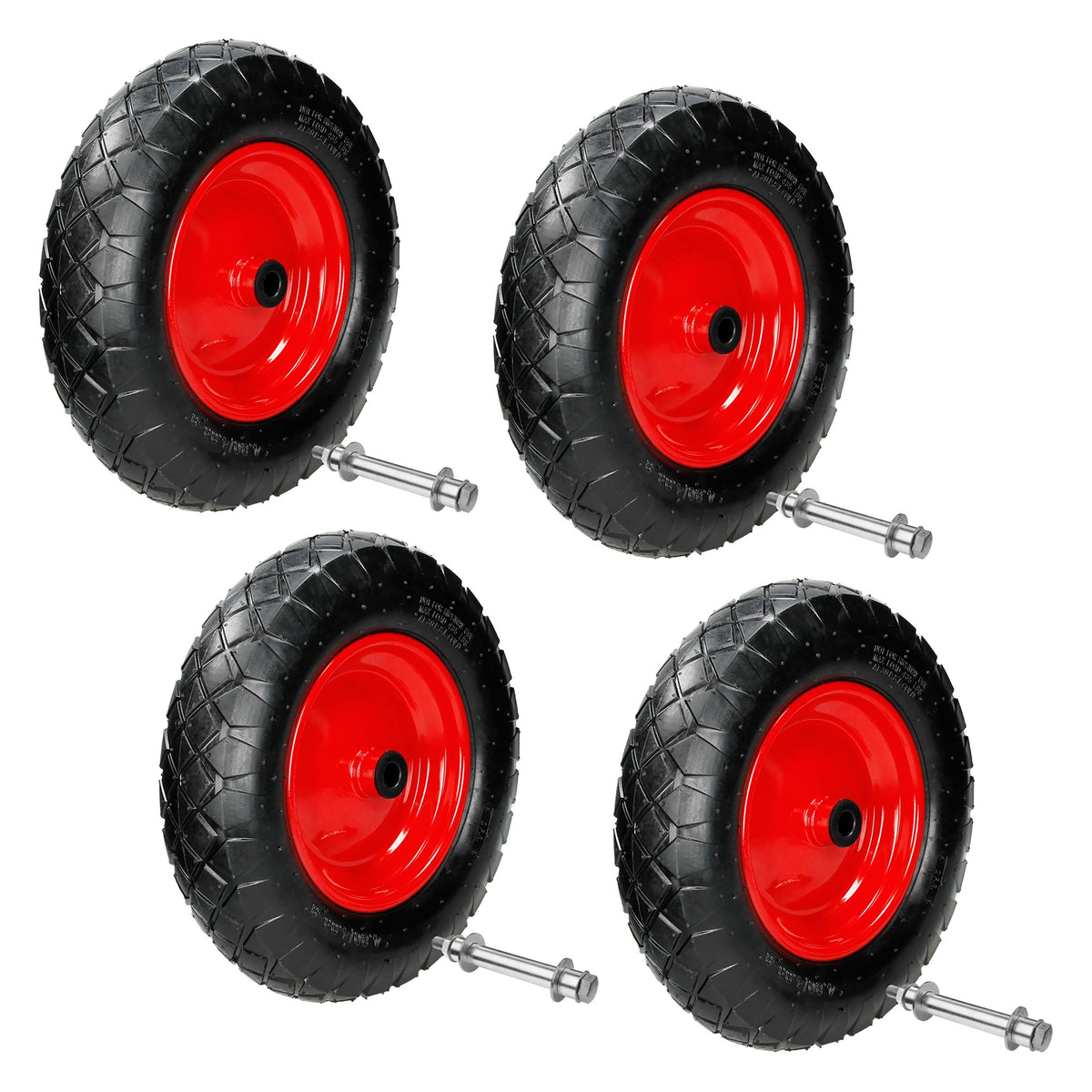
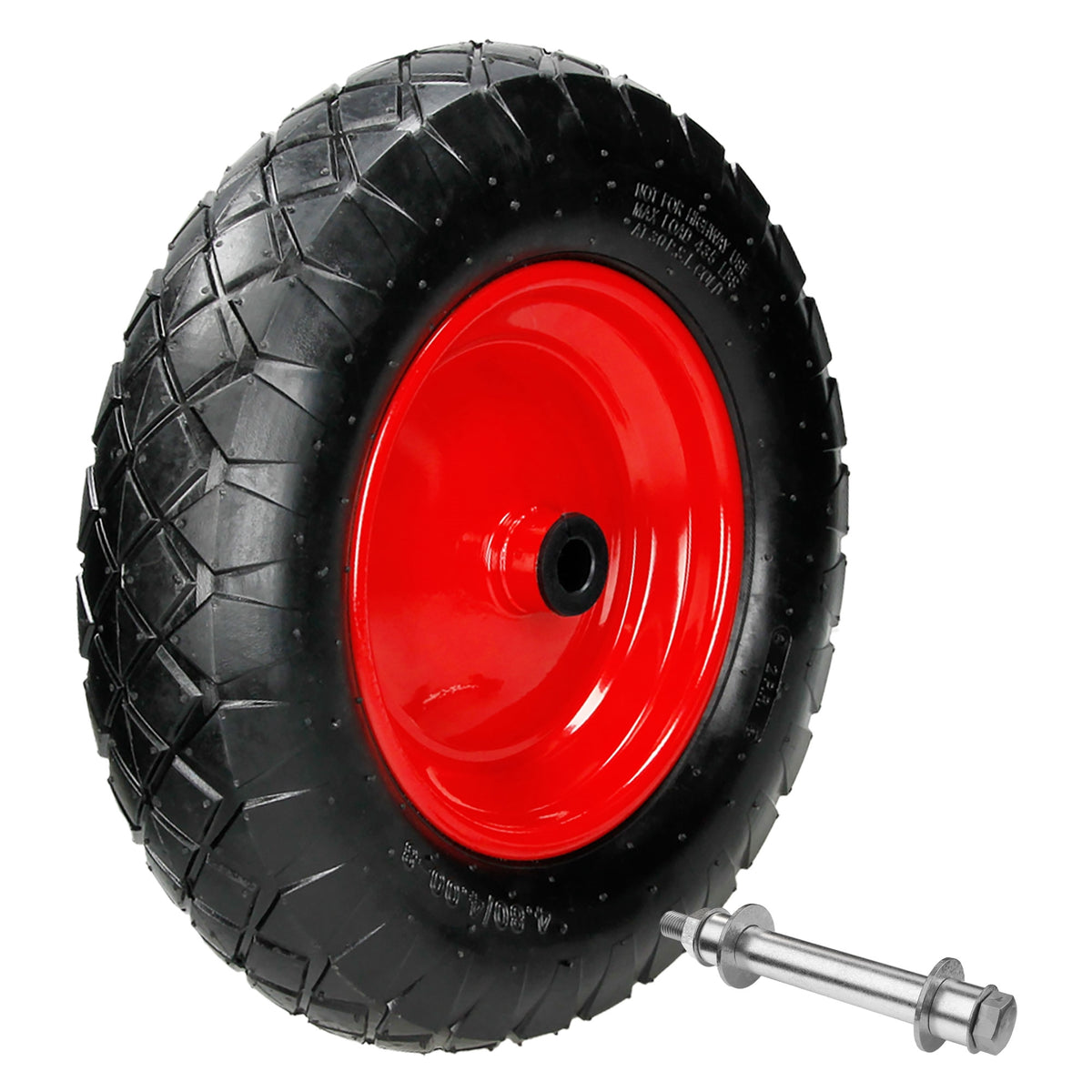
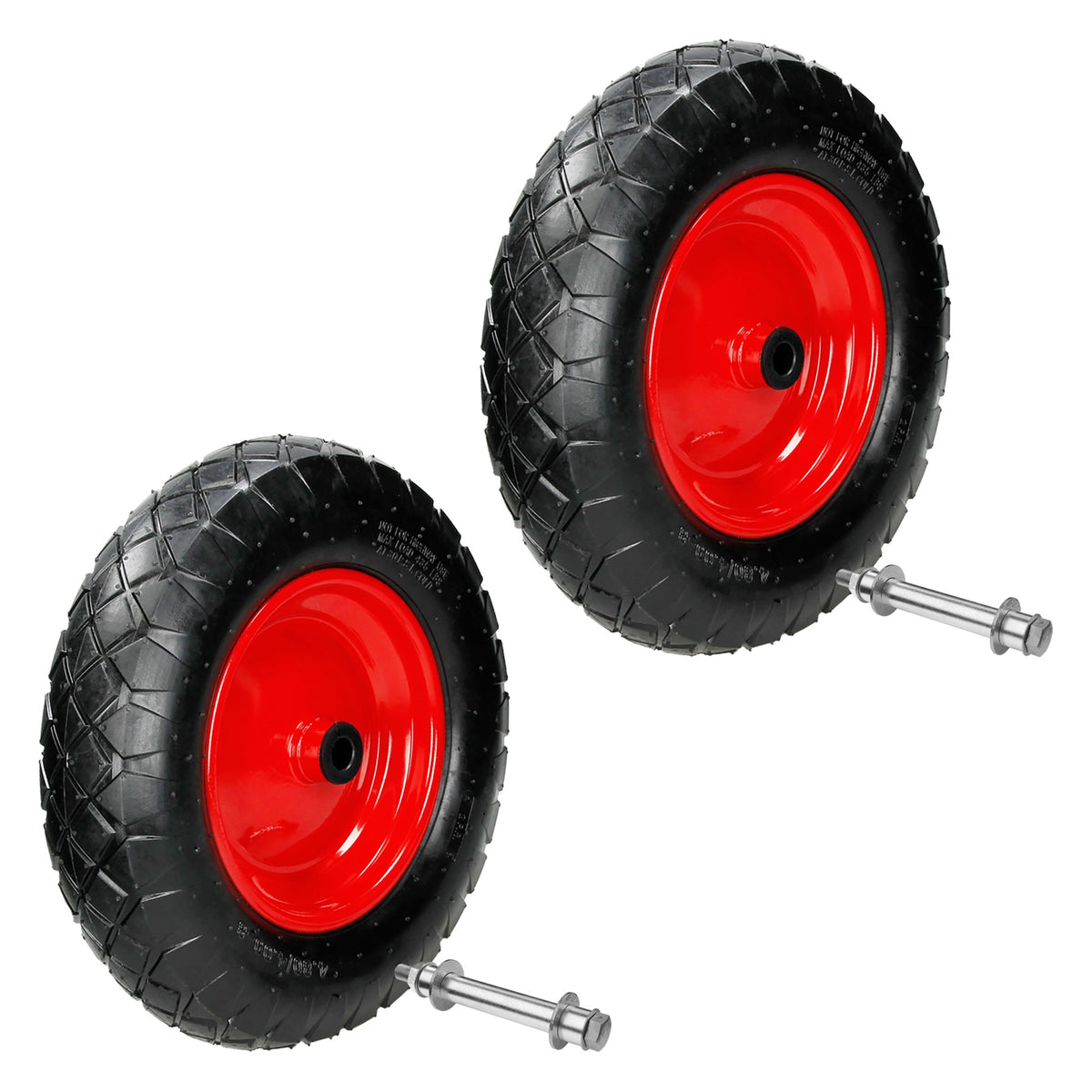
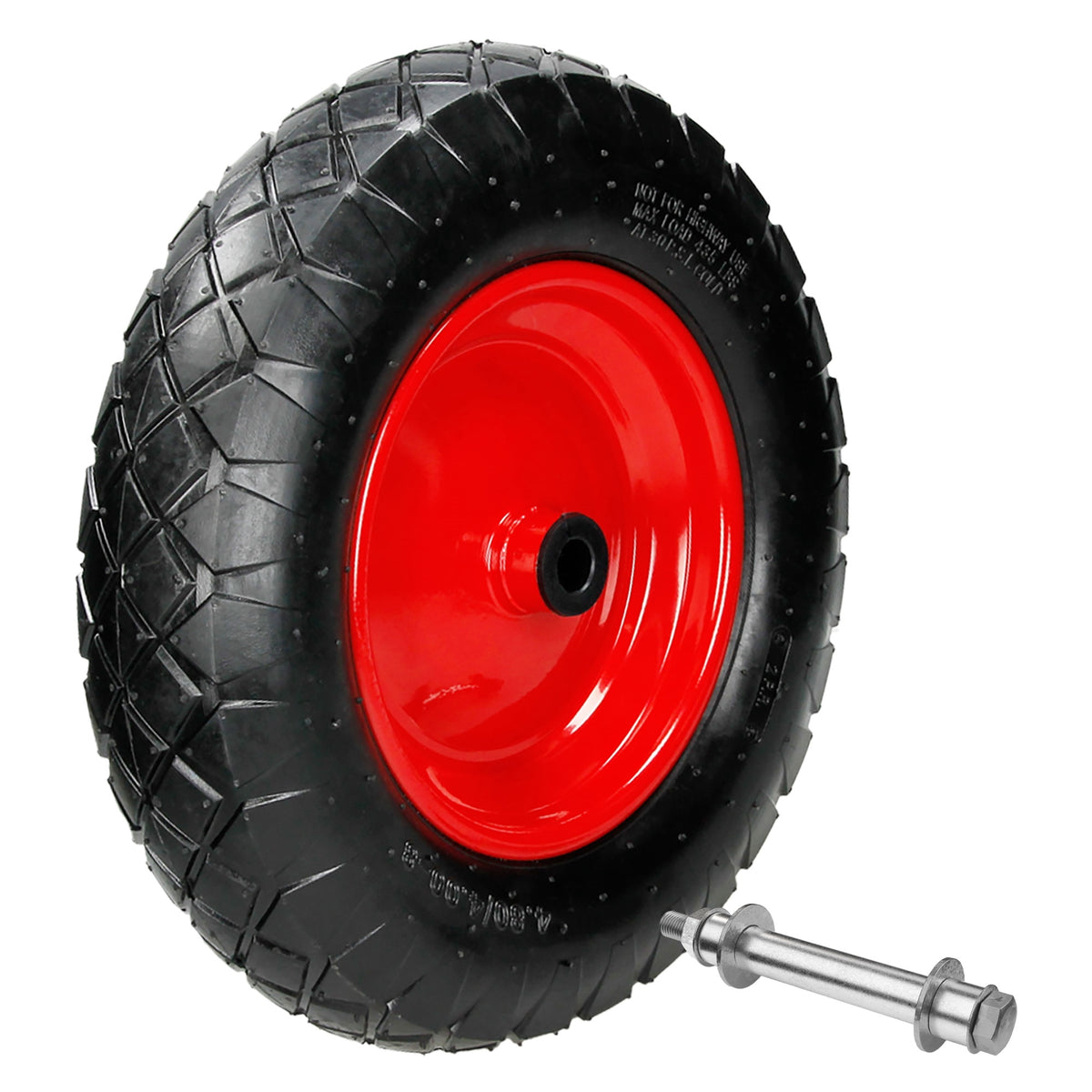
- robust wheel
- durable handles
Which is better: a wheelbarrow with one or two wheels?
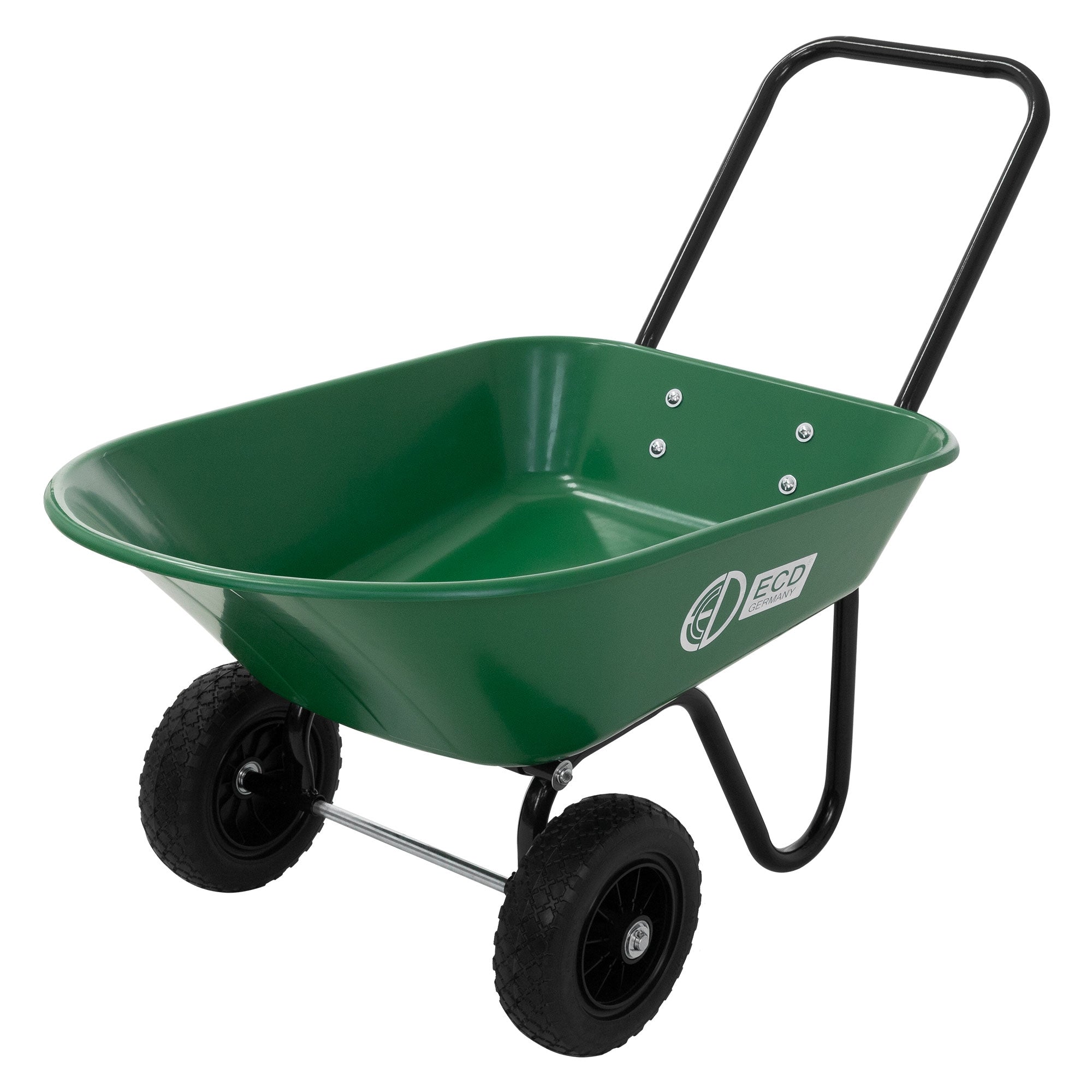
The classic single-wheel wheelbarrow is especially easy to maneuver and is ideal for narrow garden paths or uneven surfaces. A two-wheel wheelbarrow, on the other hand, is significantly more stable and easier to control, especially when carrying heavy loads. However, it is less maneuverable and needs a little more space to turn.
- One wheel: highly maneuverable and ideal for gardening
- One wheel: great for narrow and uneven paths
- Two wheels: particularly stable
- Two wheels: ideal for heavy loads
What capacity should a wheelbarrow have?
The right capacity depends on how you plan to use it. For smaller gardening tasks, 60 to 100 liters is often enough. Models with a capacity of around 80 to 120 liters are particularly versatile. For extensive jobs or construction sites, 120 to 200 liters may be a better choice.
- 60–80 liters: small gardening tasks and light transport
- 80–120 liters: versatile all-rounder for the garden and home
- 120–160 liters: larger gardening and construction projects
- 160 liters and up: large quantities and heavy transport tasks
Why choose wheelbarrows from ECD Germany?
At ECD Germany, you’ll find practical wheelbarrows for a variety of uses around the garden, home, workshop, and construction site. The focus is on durable materials, reliable construction, and ease of use.
- sturdy, durable construction
- a range of capacities
- durable tubs
- practical tires
- comfortable to use
- attractive prices for DIY enthusiasts and garden owners
Conclusion: The right wheelbarrow for the garden and construction site
The right wheelbarrow should always suit the intended use. For gardening, lightweight, maneuverable models with a capacity of around 80 to 120 liters are especially practical. If you need to transport construction debris, gravel, or heavy materials, look for a sturdy steel tray, a high load capacity, and durable tires.
The number of wheels also makes a difference: one wheel offers maximum maneuverability, while two wheels provide greater stability with heavy loads. By also considering the material, capacity, ergonomics, and tires, you can quickly find a model that noticeably makes everyday work easier.
With a suitable wheelbarrow from ECD Germany, soil, garden waste, building materials, and many other loads can be transported reliably and comfortably.







Wheelbarrows – the practical helper for gardening, construction and transport
Whether digging over the garden, transporting soil and compost, or moving sand, gravel and construction debris on a building site, a sturdy wheelbarrow makes many tasks considerably easier. At first glance, they may look like simple transport equipment, but models can differ significantly in load capacity, volume, material, tyres and handling.
The right wheelbarrow should therefore do more than simply carry as much as possible. What matters is that it suits your intended use and can be moved safely and under control, even when heavily loaded.
Key factors when choosing a wheelbarrow include load capacity and its own weight, capacity, tray material, tyres, frame, handles and overall build quality. Whether for a home garden, renovation work or professional use on a building site, the right model makes transporting heavy loads much easier.
What types of wheelbarrows are there?
Wheelbarrows differ primarily in their design and intended use. While lightweight garden models should be as easy to move as possible, construction wheelbarrows need to be more durable and stable.
Garden wheelbarrow – lightweight and versatile
For typical gardening tasks, a lightweight wheelbarrow is often perfectly adequate. It is suitable for transporting soil, leaves, plants, branches, compost or gardening tools. Models with a capacity of around 80 to 120 litres are particularly practical. They offer enough space for most gardening tasks without becoming unnecessarily heavy and cumbersome.
- easy to push
- sufficiently manoeuvrable
- sturdy tray
- comfortable handles
- suitable for uneven surfaces
Construction wheelbarrow – sturdy for heavy loads
The demands are considerably higher on building sites. Sand, gravel, mortar, stones, soil and construction debris are often transported here. A sturdy construction and high load capacity are therefore particularly important. Heavy-duty construction wheelbarrows often feature reinforced steel trays and sturdy frames. Depending on the model, they can carry over 150 kg, making them suitable for heavy materials.
Which wheelbarrow is best?
There is no single best wheelbarrow for everyone – it depends on what you need to transport. For gardening, a lightweight model with a plastic tray can be especially convenient, while a heavy steel wheelbarrow comes into its own on a building site. When choosing, it is therefore worth considering the balance between load capacity, volume, the wheelbarrow’s own weight and manoeuvrability.
- sturdy, durable construction
- controlled movement, even when fully loaded
- stable footing
- high-quality handles
- suitable for the intended surface
How many kg can a wheelbarrow carry?
Load capacity depends greatly on the design, tub, frame and wheel suspension. Lightweight garden wheelbarrows are often designed to carry around 80 to 120 kg, while robust models for construction and transport work can carry 150 to 250 kg or more. It is important to observe the maximum load capacity of the respective model.
The heavier the load, the more the surface, centre of gravity and weight distribution affect handling. For everyday use, sufficient load capacity with a little extra margin is therefore usually more practical than constantly pushing the maximum weight to its limit.
Which wheelbarrow is best for gardening?
For gardening, lightweight and comfortable handling matters more than maximum load capacity. Soil, bark mulch, leaves or plants often need to be transported across lawns, gravel paths or uneven surfaces. A good garden wheelbarrow should therefore be as lightweight as possible while still having a sturdy tub. A capacity of around 80 to 120 litres is suitable for many typical gardening tasks.
- low dead weight
- sturdy plastic or steel container
- pneumatic tyre
- ergonomic handles
- good manoeuvrability
Which wheelbarrow is best for rubble and heavy loads?
A particularly robust wheelbarrow is recommended for rubble, gravel, sand, stones or large quantities of soil. The key factors here are load capacity, tub stability and a sturdy frame. A steel tub is particularly resistant when carrying heavy and angular materials. A sturdy wheel with a durable axle is also important.
- sturdy steel tub
- reinforced frame
- high load capacity
- large capacity
- robust wheel
- durable handles
Which is better: a wheelbarrow with one or two wheels?
The classic single-wheel wheelbarrow is especially easy to maneuver and is ideal for narrow garden paths or uneven surfaces. A two-wheel wheelbarrow, on the other hand, is significantly more stable and easier to control, especially when carrying heavy loads. However, it is less maneuverable and needs a little more space to turn.
- One wheel: highly maneuverable and ideal for gardening
- One wheel: great for narrow and uneven paths
- Two wheels: particularly stable
- Two wheels: ideal for heavy loads
What capacity should a wheelbarrow have?
The right capacity depends on how you plan to use it. For smaller gardening tasks, 60 to 100 liters is often enough. Models with a capacity of around 80 to 120 liters are particularly versatile. For extensive jobs or construction sites, 120 to 200 liters may be a better choice.
- 60–80 liters: small gardening tasks and light transport
- 80–120 liters: versatile all-rounder for the garden and home
- 120–160 liters: larger gardening and construction projects
- 160 liters and up: large quantities and heavy transport tasks
Why choose wheelbarrows from ECD Germany?
At ECD Germany, you’ll find practical wheelbarrows for a variety of uses around the garden, home, workshop, and construction site. The focus is on durable materials, reliable construction, and ease of use.
- sturdy, durable construction
- a range of capacities
- durable tubs
- practical tires
- comfortable to use
- attractive prices for DIY enthusiasts and garden owners
Conclusion: The right wheelbarrow for the garden and construction site
The right wheelbarrow should always suit the intended use. For gardening, lightweight, maneuverable models with a capacity of around 80 to 120 liters are especially practical. If you need to transport construction debris, gravel, or heavy materials, look for a sturdy steel tray, a high load capacity, and durable tires.
The number of wheels also makes a difference: one wheel offers maximum maneuverability, while two wheels provide greater stability with heavy loads. By also considering the material, capacity, ergonomics, and tires, you can quickly find a model that noticeably makes everyday work easier.
With a suitable wheelbarrow from ECD Germany, soil, garden waste, building materials, and many other loads can be transported reliably and comfortably.
Find even more among our top sellers







Popular categories


