


Radiator cladding & heating cover – more design, safety, and comfort
A modern radiator cladding provides a stylish look and allows older or unobtrusive radiators to harmoniously integrate into the living concept. Whether in the living room, bedroom, hallway, or dining area: a suitable heating cover can enhance the room visually, shield hot surfaces, and simultaneously create additional storage space. It is important to have a construction that ensures sufficient air circulation so that the heating performance is maintained as much as possible.
Why use radiator cladding at all?

Many radiators still function technically perfectly, but visually they appear outdated or do not match the modern furnishing style. Instead of replacing the entire heating system, a heating cover offers a simple way to visually enhance the existing radiator and harmoniously integrate it into the room.
- significantly more beautiful and modern room aesthetics
- tidy and harmonious overall impression
- protection from hot radiator edges
- can make the radiator safer for children
- additional storage space possible
- simple visual enhancement without extensive renovation
- especially practical for rental apartments
Is it sensible to clad radiators?

A radiator cladding can be sensible if it is designed in such a way that warm air can continue to circulate unhindered. Modern heating covers therefore have open areas and air slots through which the heat can enter the room. In the case of completely closed self-constructed designs, there is a risk of heat buildup and reduced heating performance.
- sufficiently sized air slots
- open areas at the top and bottom
- sufficient distance between radiator and cladding
- suitable, preferably heat-permeable materials for use
- no completely closed construction
How high is the heat loss through a radiator cladding?

The possible heat loss largely depends on the construction and air circulation. A well-planned radiator cover can only slightly influence heat output, while poorly ventilated or completely closed enclosures can significantly impair heating performance. Therefore, when purchasing, special attention should be paid to sufficiently large air openings and an appropriate distance from the radiator.
Materials in comparison – which radiator cover suits you?
The material of a radiator cover not only influences the appearance but also stability, maintenance effort, and design options. Depending on the furnishing style, various materials and surfaces are available.
Radiator cover made of wood
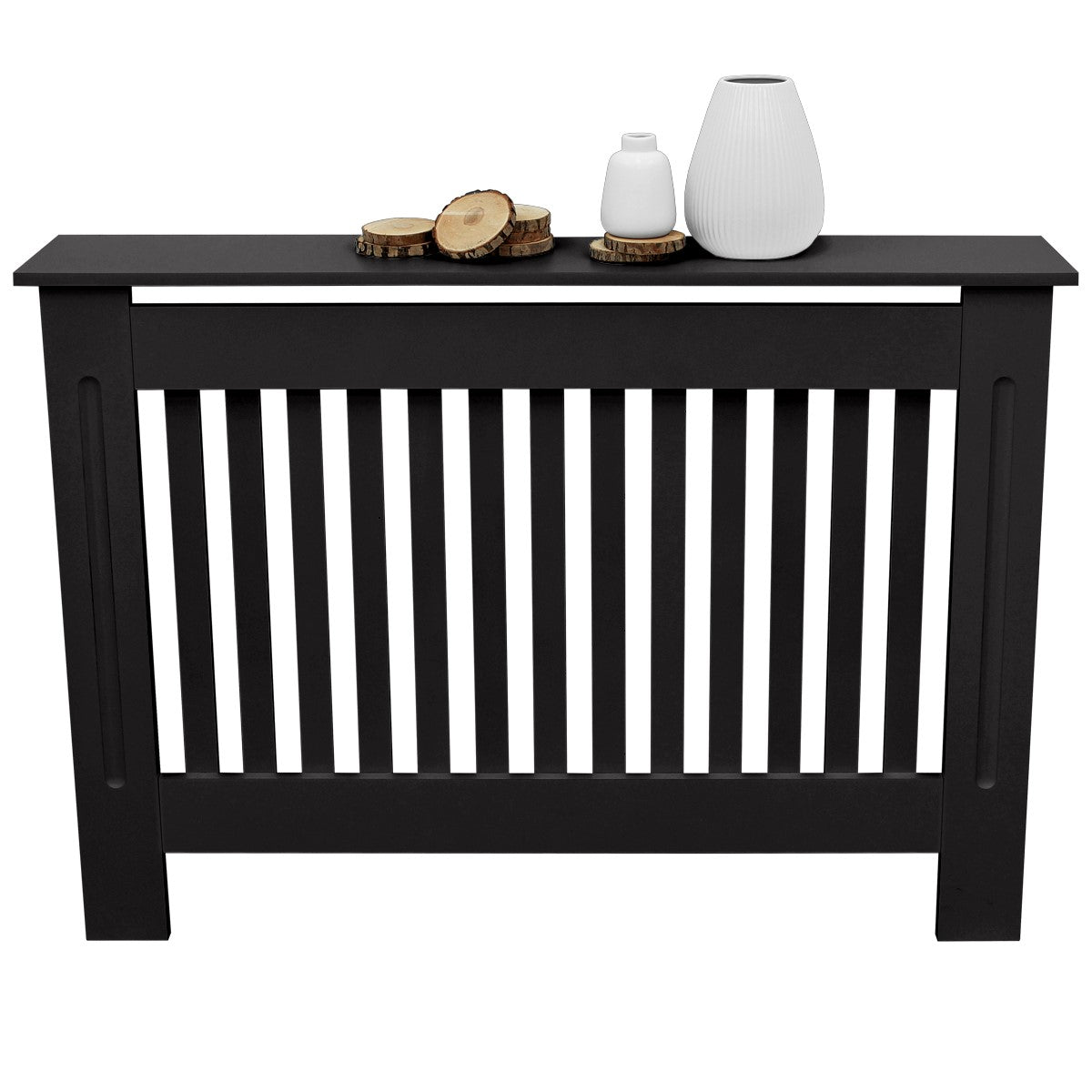
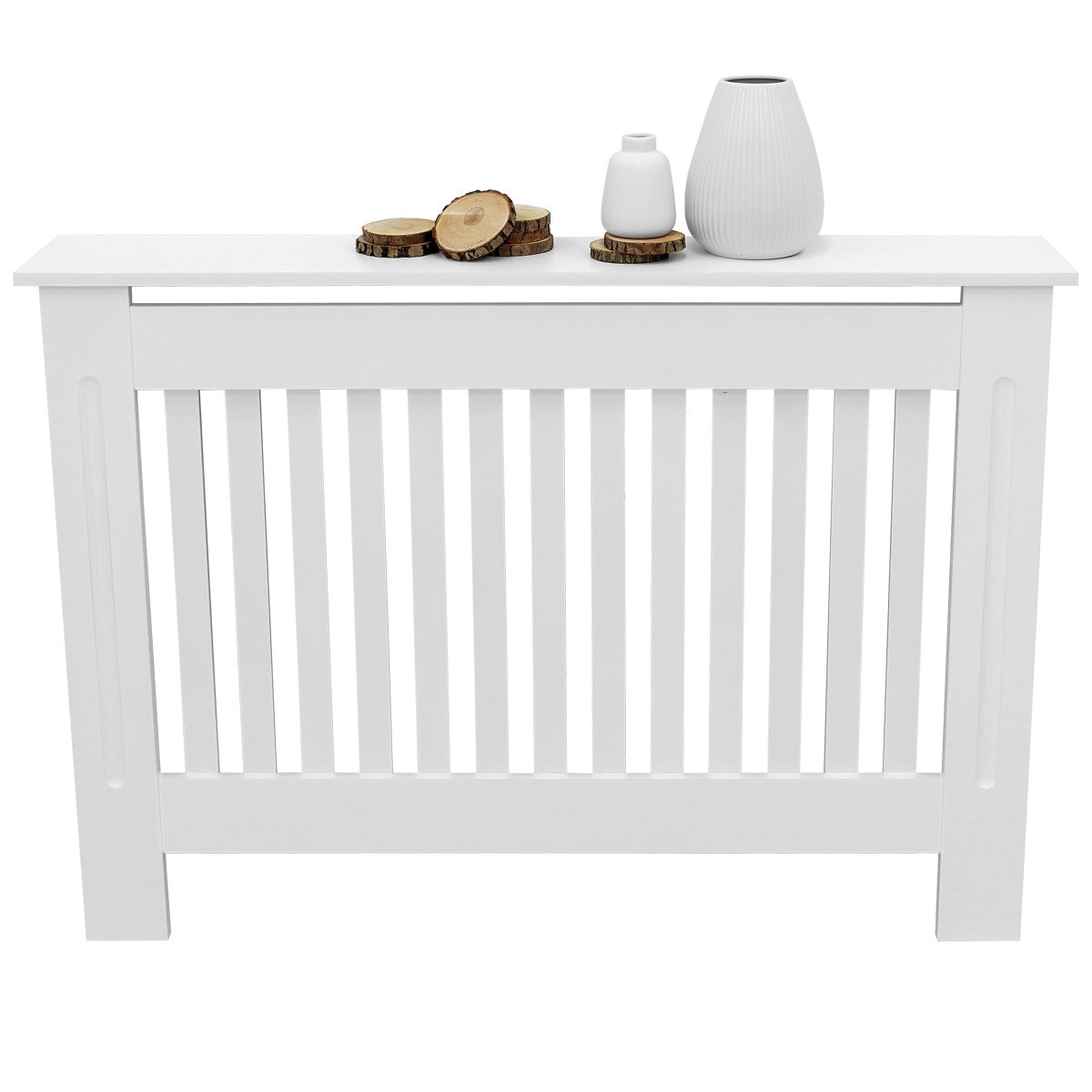
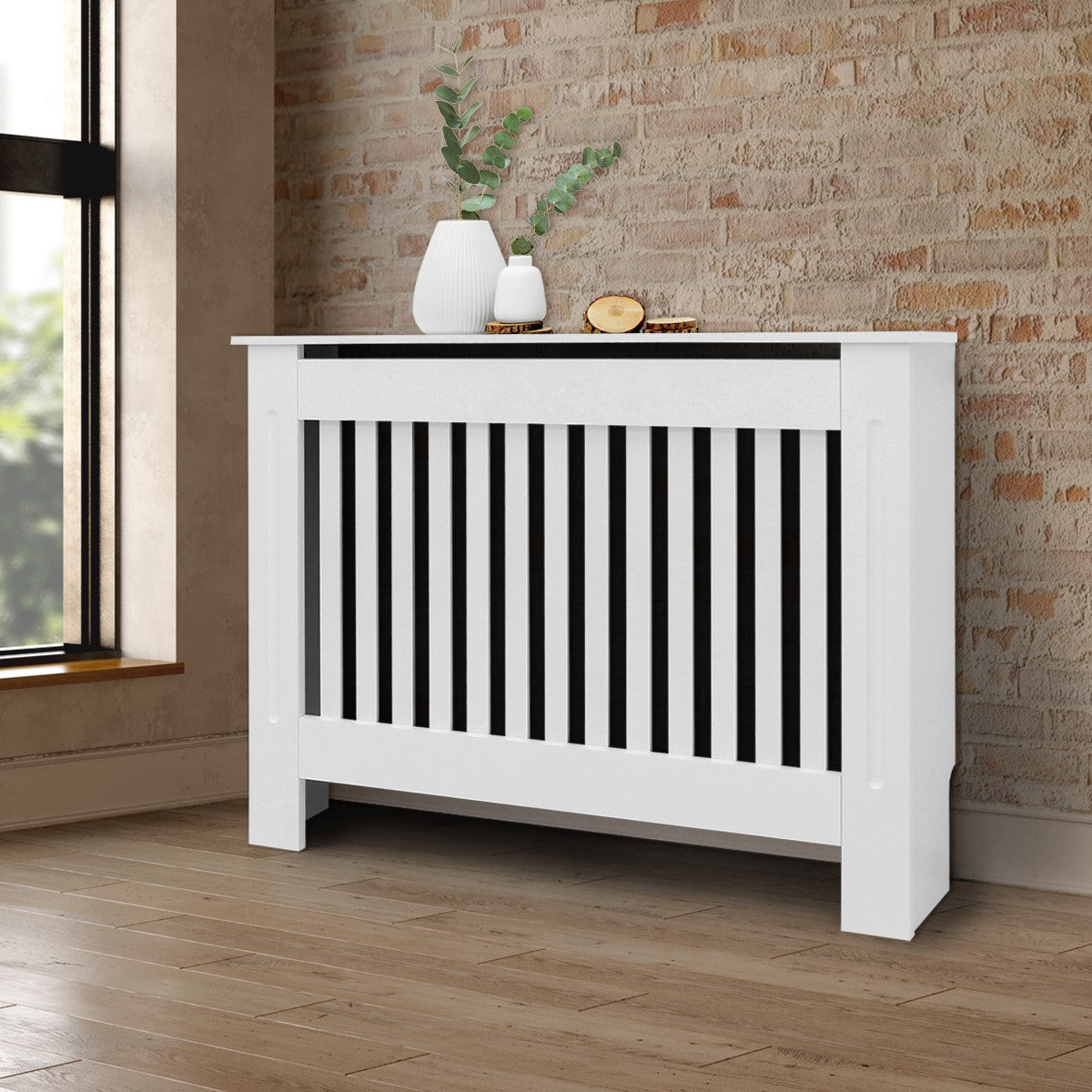
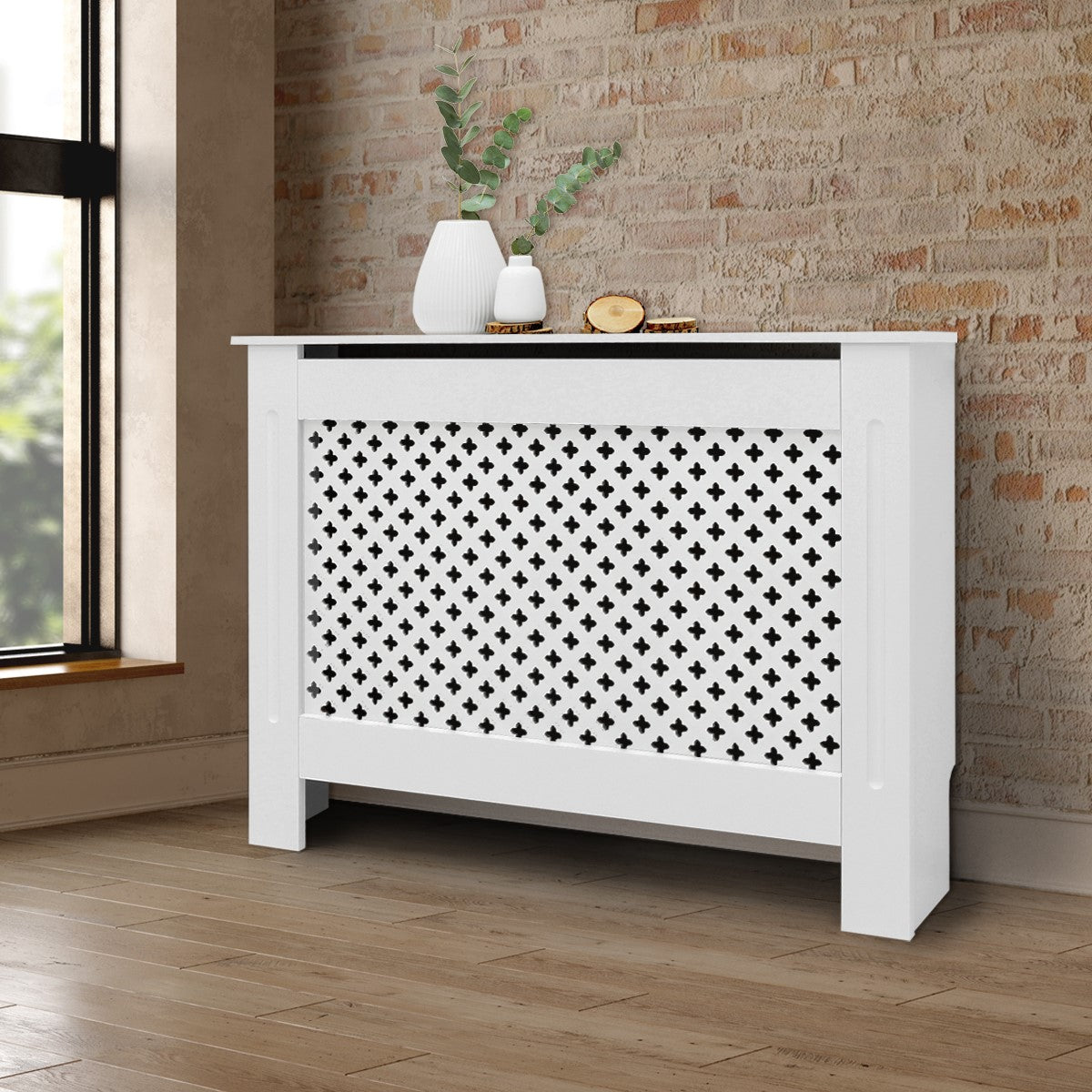
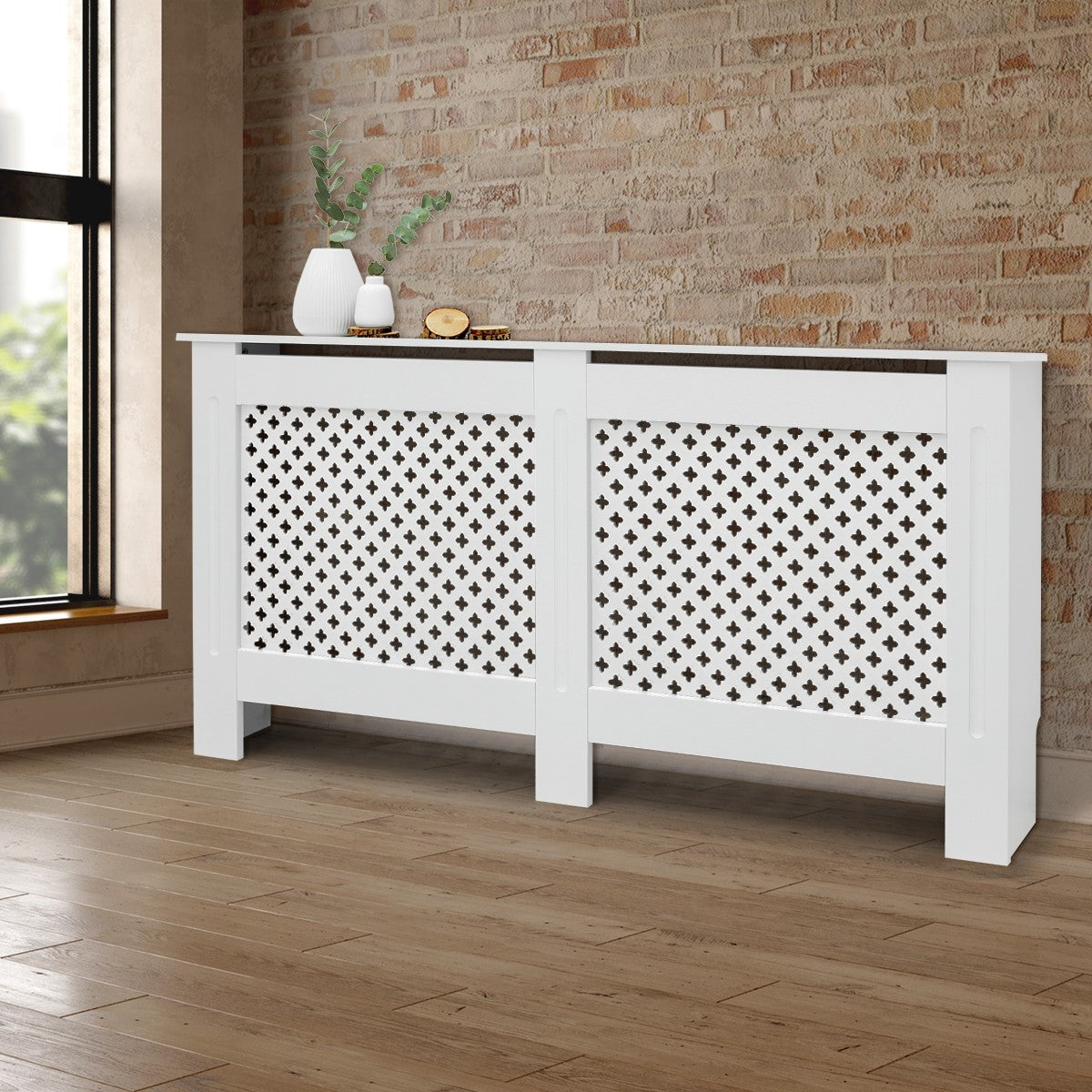
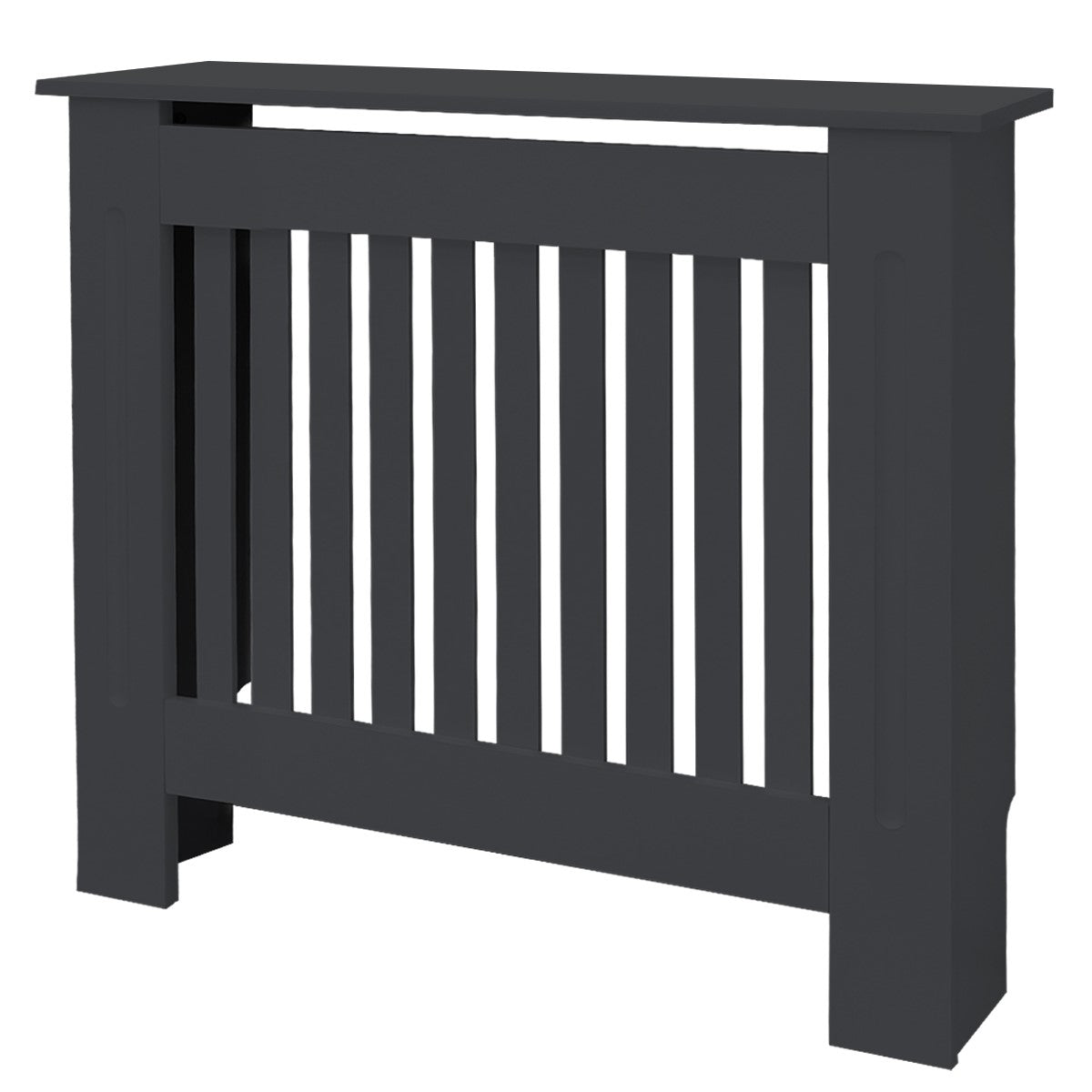
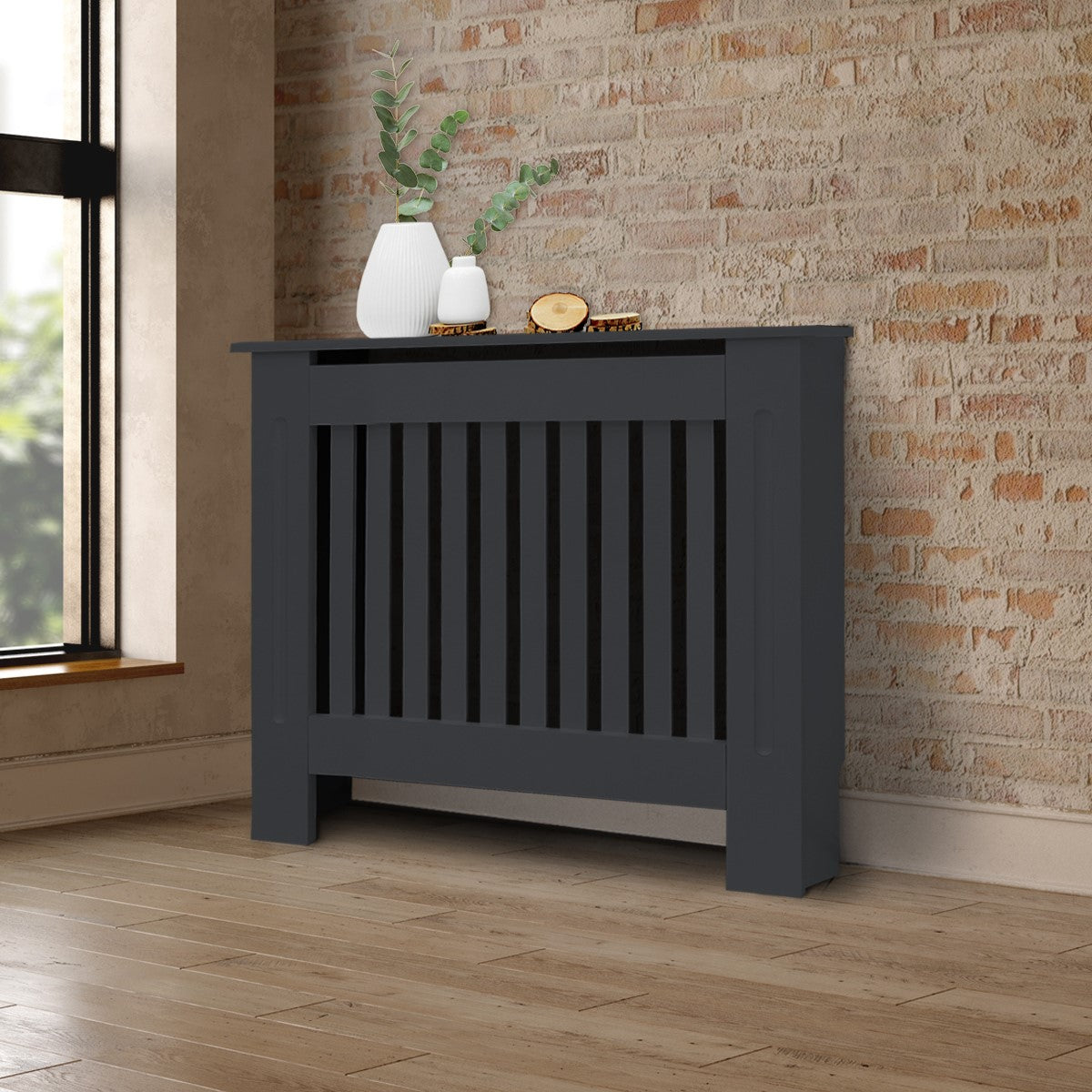
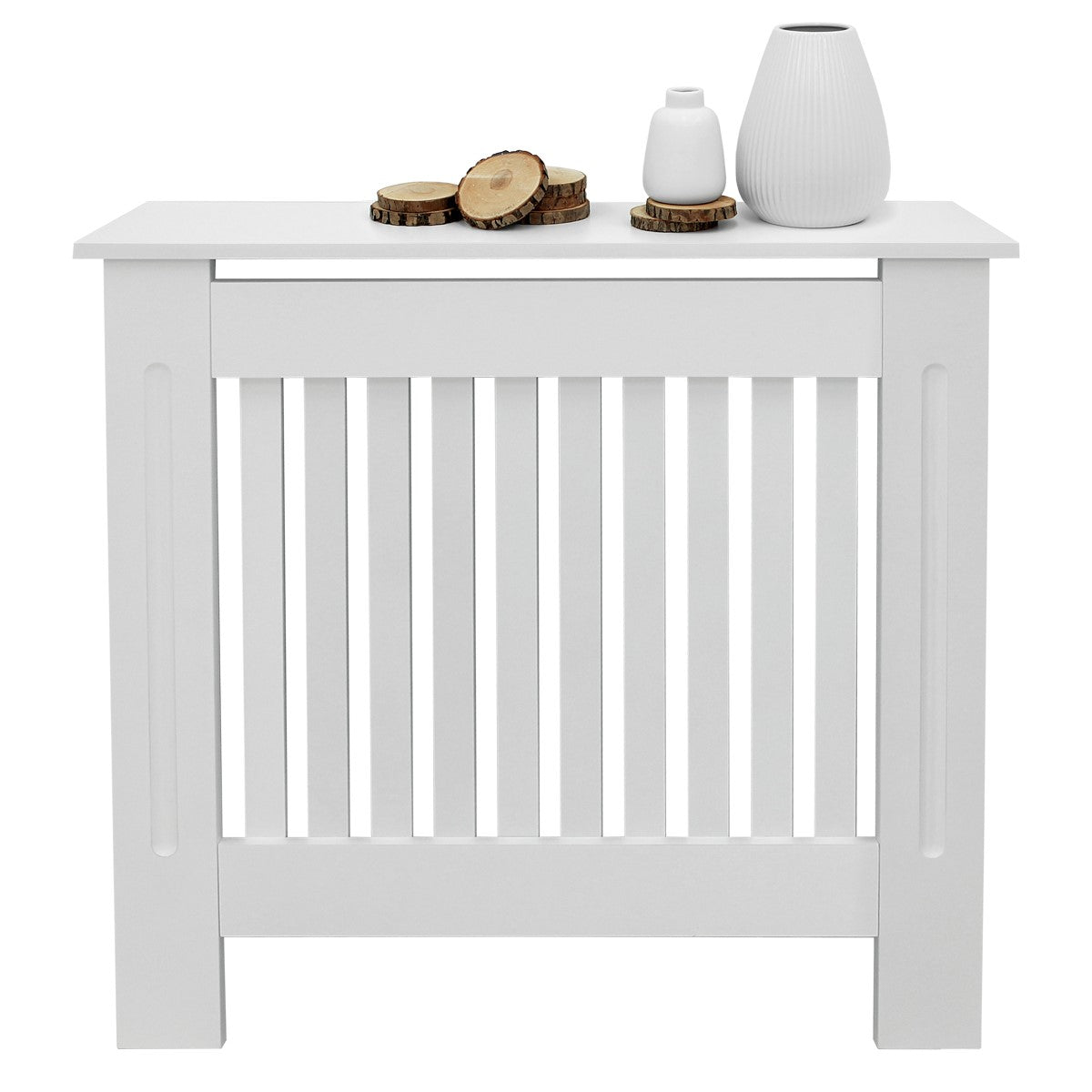
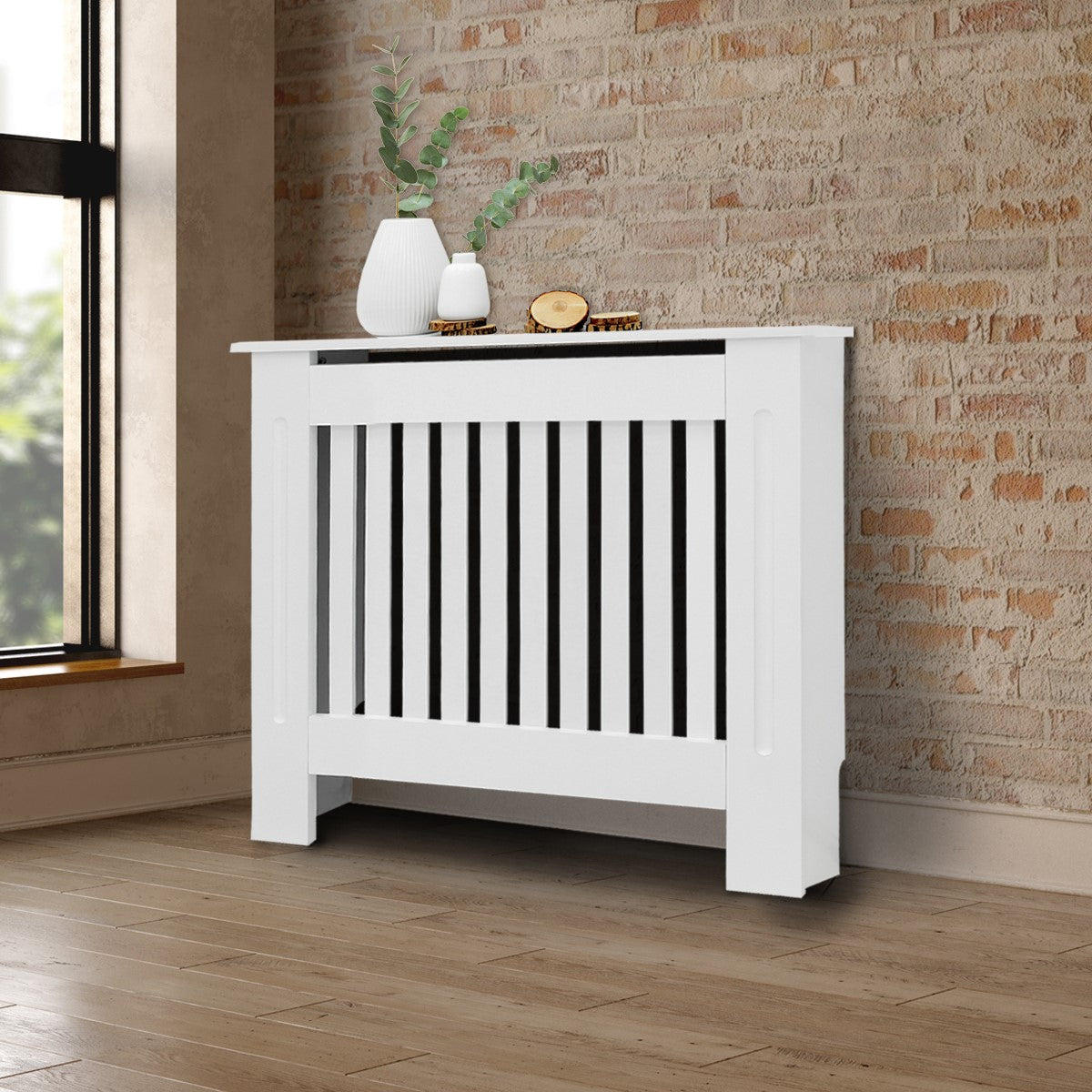
Wood and wood-based materials appear warm, homely, and timeless. Particularly popular are white MDF covers as well as models with classic or modern slat optics. They are excellent for living and sleeping areas and can be visually harmoniously combined with different furnishing styles.
- homely and warm appearance
- numerous designs and colors available
- well paintable and versatile in design
- ideal for living and sleeping areas
- attractive price-performance ratio
Metal radiator cover
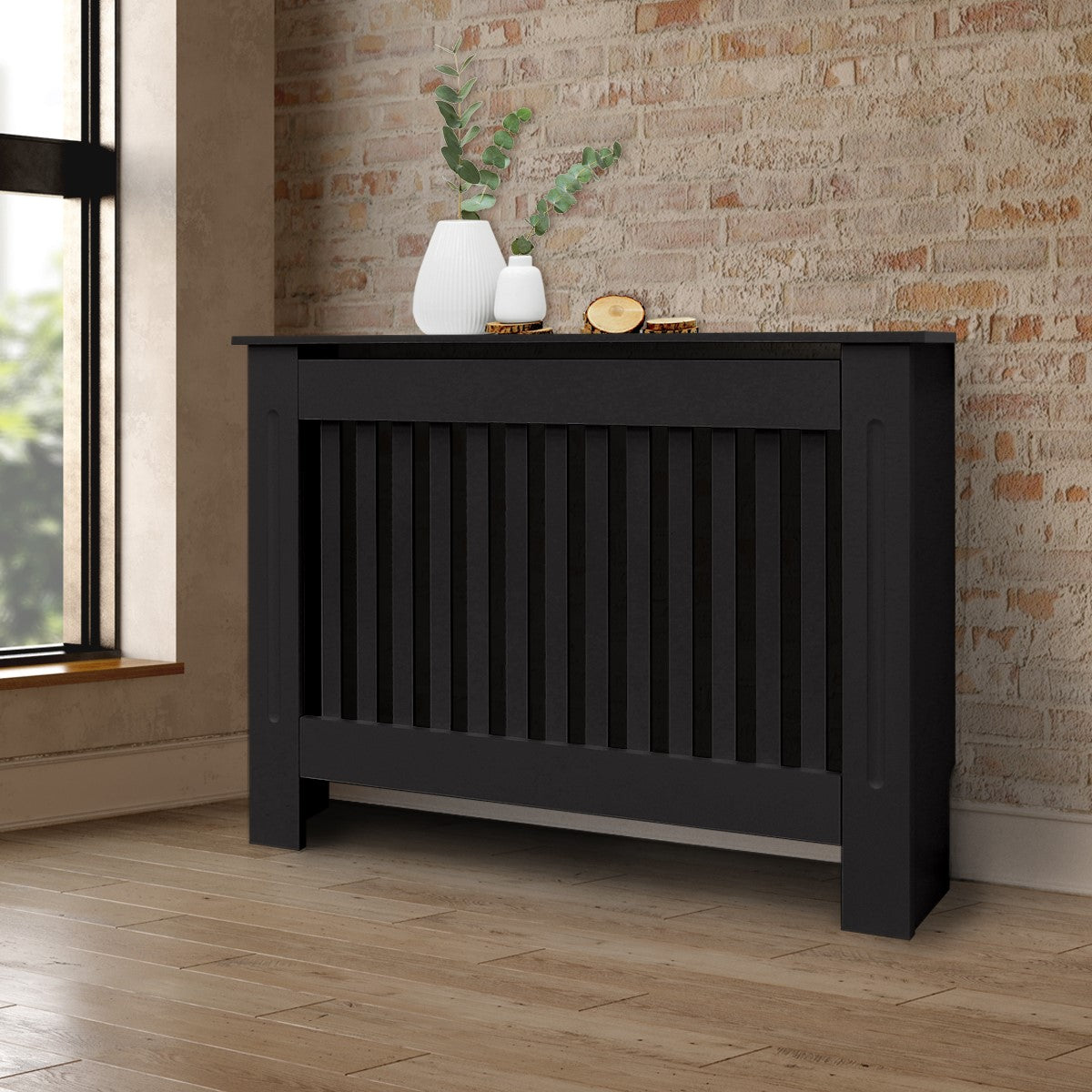
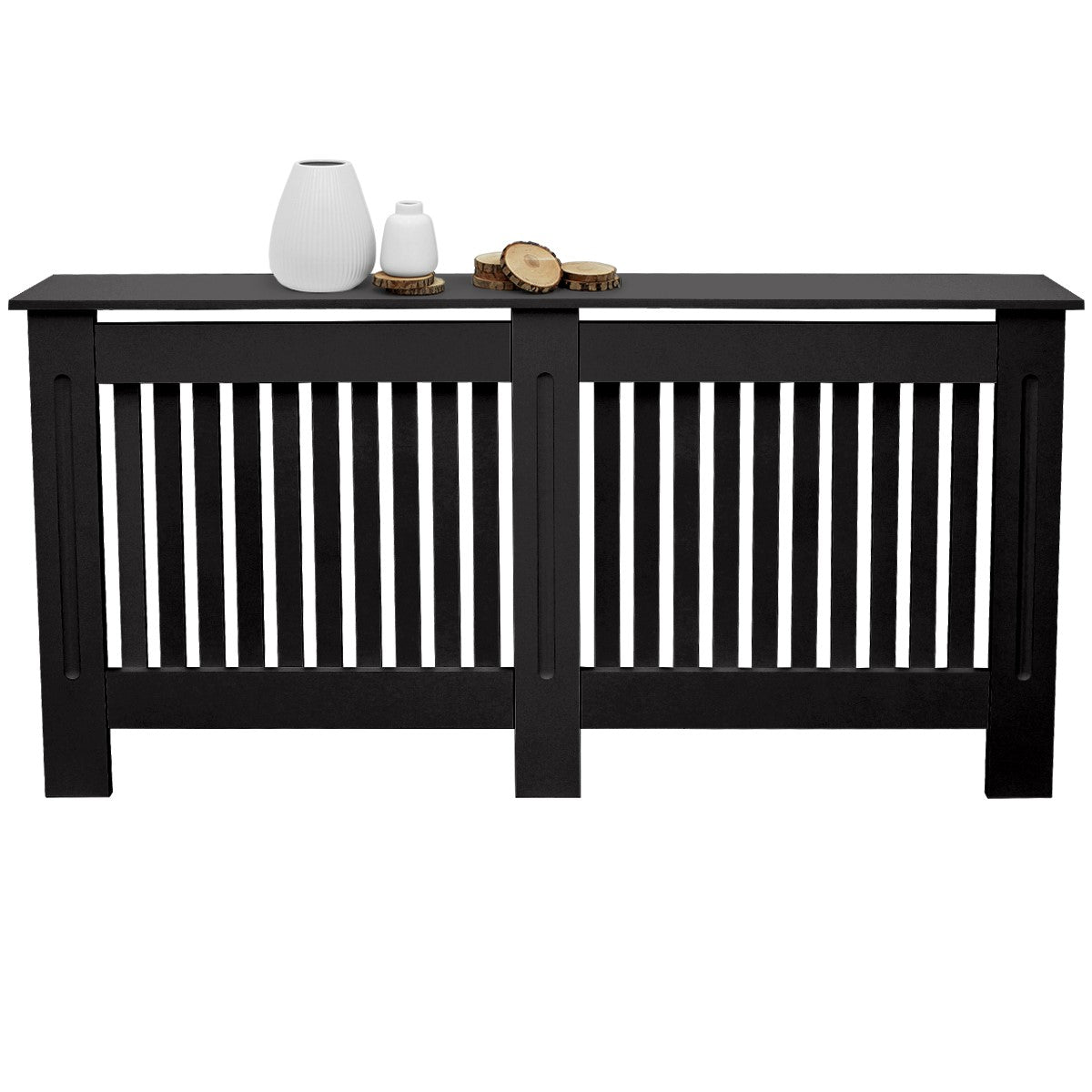
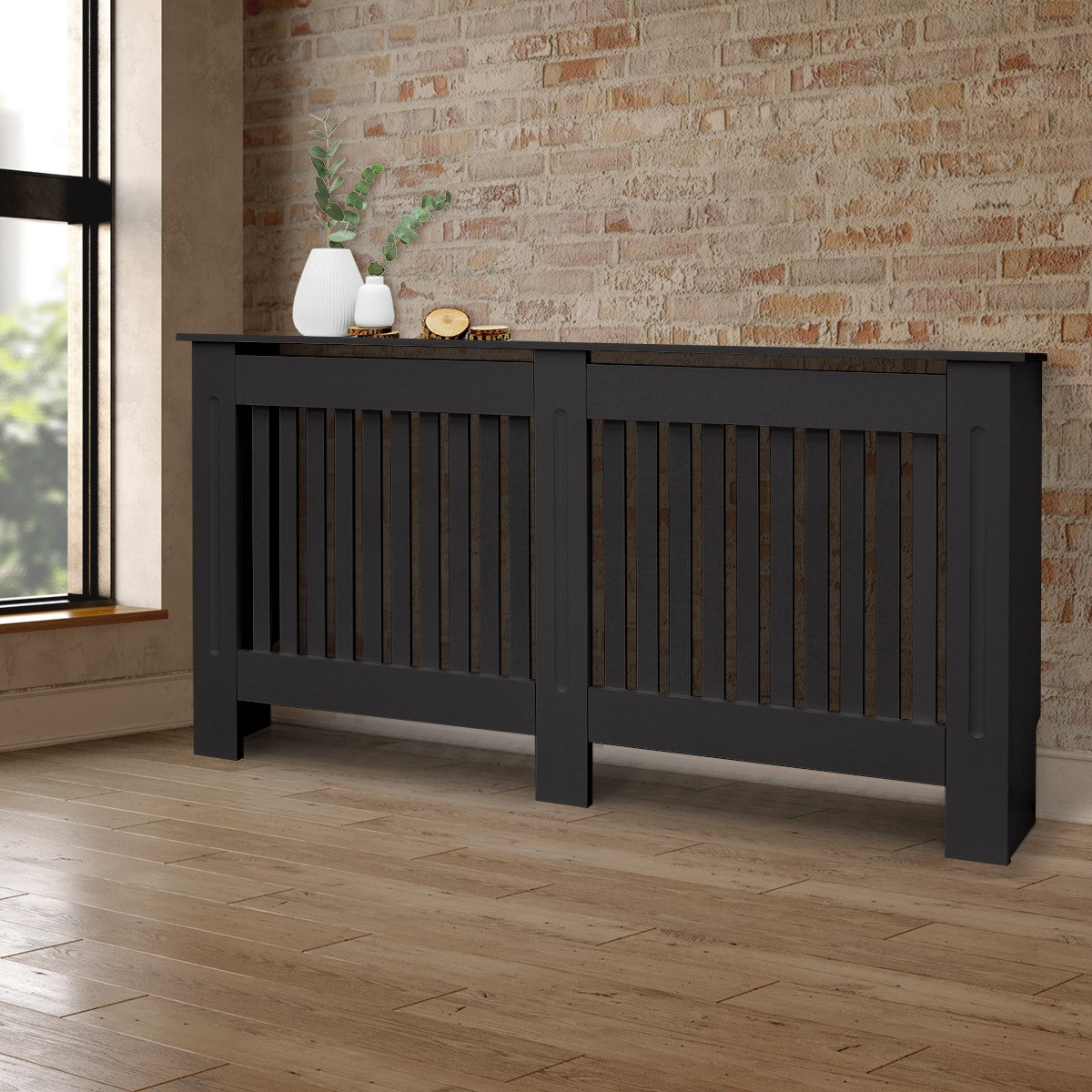
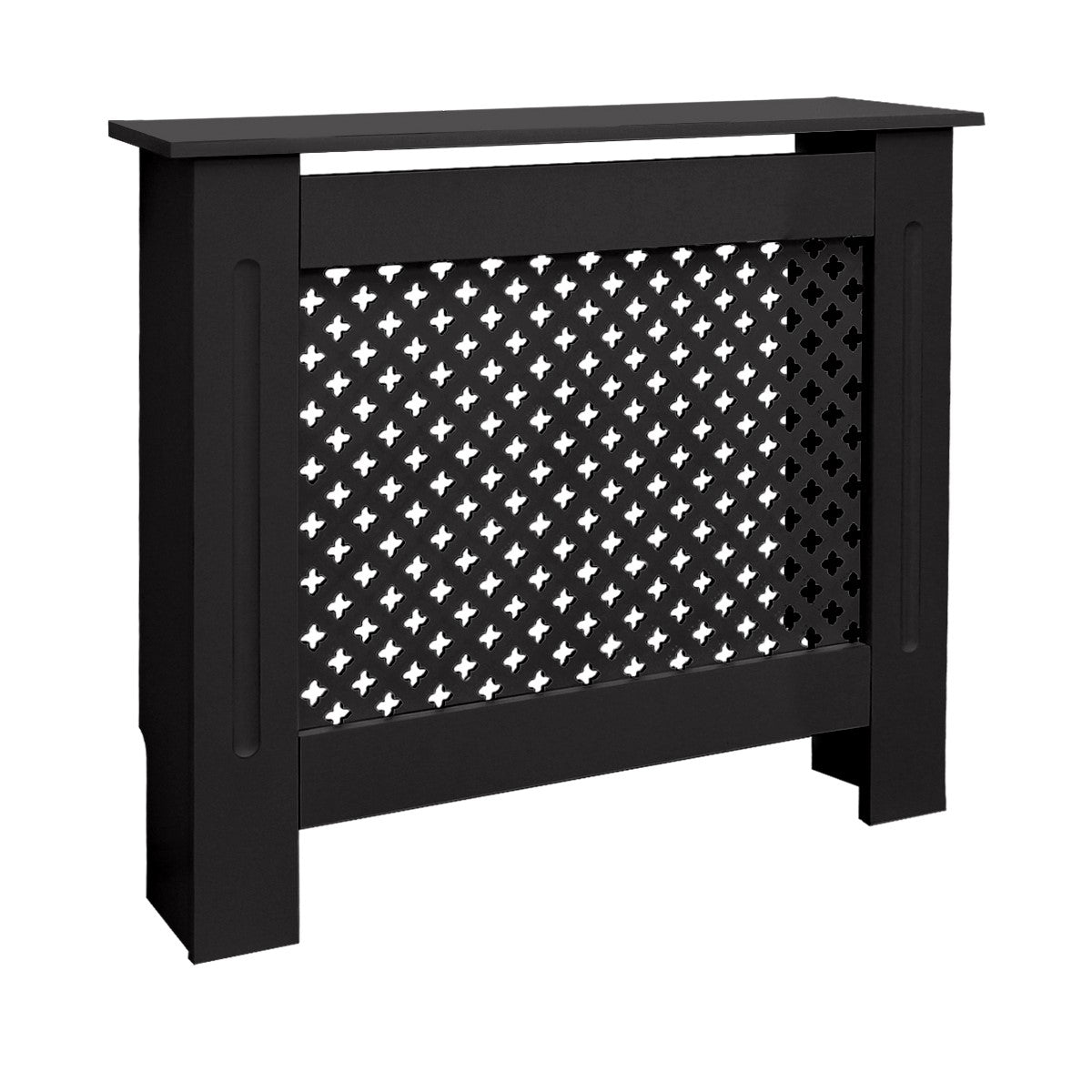
Metal covers appear modern and minimalist and are characterized by a robust construction. Black and anthracite surfaces fit particularly well with modern furnishings and set a striking accent in the room.
- modern and minimalist appearance
- robust and durable construction
- easy-care surface
- ideal for modern furnishing concepts
- popular colors like black and anthracite
Marble and stone optics
Radiator covers in marble or stone optics give the room a particularly high-quality and luxurious effect. They are especially suitable for modern living concepts and can also be used in stylishly designed bathrooms. Depending on the material, such variants can, however, be heavier and more expensive.
Which radiator cover suits your room?
The ideal radiator cover depends on both the respective room and the desired design and existing installation situation. While a decorative shelf is often desired in the living room, a calm appearance is prioritized in the bedroom and additional safety in the children's room.
Radiator cover in the living room
In the living room, the visual design is usually the focus. A larger radiator cover with an integrated shelf can elegantly incorporate the radiator into the room concept while also creating space for decorative elements.
- Plants and decoration
- Picture frames
- Candles
- Lamps
- Other decorative accessories
Radiator cover in the bedroom
In the bedroom, simple and calm designs are particularly suitable. White radiator covers, minimalist fronts, and models with as inconspicuous mounting as possible harmoniously integrate into a relaxed room design.
Radiator cover in the children's room
In the children's room, a radiator cover can help shield hot surfaces and sharp edges of the radiator. This can make everyday life with children safer. At the same time, sufficient air circulation must also be ensured here.
Measuring the radiator correctly – what you should pay attention to
Before purchasing a radiator cover, you should carefully measure the existing radiator and the available space. Only by considering width, height, and depth can you ensure that the cover provides sufficient space and does not impede air circulation.
Measuring the width of the radiator
Measure the total width of the radiator, taking into account protruding components such as valves. Additionally, there should be sufficient space between the radiator and the cover on the sides.
Measuring the height of the radiator
Measure the height from the floor to the top edge of the radiator. The radiator cover should not rest directly on the radiator so that warm air can escape upwards.
Measuring the depth of the radiator
Especially older fin radiators can be significantly deeper than modern flat radiators. Therefore, you should always measure the deepest point of the radiator and plan sufficient space for the later cover.
Consider air circulation
Adequate air circulation is crucial for heating performance. There should be enough space between the radiator and the covering, and the warm air must be able to flow freely upwards and into the room.
Why should radiators not be completely covered?
A completely closed radiator cover can obstruct air circulation and thus reduce the heat output of the radiator. A good radiator cover visually conceals the radiator but still allows warm air to enter the room sufficiently.
- Avoid reduced heating performance
- Prevent heat buildup
- Avoid unnecessarily higher energy consumption
- Enable good room temperature regulation
Purchase criteria – what you should really pay attention to
When buying a radiator cover, attention should be paid not only to the design but especially to the technical and practical properties. Key factors are suitable dimensions, good air flow, stable material, and uncomplicated assembly.
- Suitable dimensions
- Adequate air circulation
- Stable material
- Easy assembly
- Easy-care surface
- Child-safe processing
- High-quality painting or coating
- Suitable color and appearance
- Good price-performance ratio
Which designs are currently particularly popular?
Modern radiator covers are primarily in demand for their simple and timeless designs. Slatted fronts, light surfaces, wood looks, and dark metal colors can be combined in various ways, making the radiator a harmoniously integrated part of the room design.
- white radiator covers
- slatted designs
- minimalist fronts
- Scandinavian style
- black metal look
- modern wood look
- floating wall solutions
- models with practical shelf space
Conclusion – more livability with the right radiator cover
A modern radiator cover combines appealing design with practical functions and can significantly enhance the visual appeal of an existing radiator. Whether classic heating cover, modern metal solution, magnetic cover, or an individual DIY solution: the right dimensions, sufficient air circulation, stable materials, and secure installation are crucial. At ML-Design, you will find various radiator covers for small and large rooms, from minimalist designs to decorative solutions with practical shelf space.













Radiator cladding & heating cover – more design, safety, and comfort
A modern radiator cladding provides a stylish look and allows older or unobtrusive radiators to harmoniously integrate into the living concept. Whether in the living room, bedroom, hallway, or dining area: a suitable heating cover can enhance the room visually, shield hot surfaces, and simultaneously create additional storage space. It is important to have a construction that ensures sufficient air circulation so that the heating performance is maintained as much as possible.
Why use radiator cladding at all?
Many radiators still function technically perfectly, but visually they appear outdated or do not match the modern furnishing style. Instead of replacing the entire heating system, a heating cover offers a simple way to visually enhance the existing radiator and harmoniously integrate it into the room.
- significantly more beautiful and modern room aesthetics
- tidy and harmonious overall impression
- protection from hot radiator edges
- can make the radiator safer for children
- additional storage space possible
- simple visual enhancement without extensive renovation
- especially practical for rental apartments
Is it sensible to clad radiators?
A radiator cladding can be sensible if it is designed in such a way that warm air can continue to circulate unhindered. Modern heating covers therefore have open areas and air slots through which the heat can enter the room. In the case of completely closed self-constructed designs, there is a risk of heat buildup and reduced heating performance.
- sufficiently sized air slots
- open areas at the top and bottom
- sufficient distance between radiator and cladding
- suitable, preferably heat-permeable materials for use
- no completely closed construction
How high is the heat loss through a radiator cladding?
The possible heat loss largely depends on the construction and air circulation. A well-planned radiator cover can only slightly influence heat output, while poorly ventilated or completely closed enclosures can significantly impair heating performance. Therefore, when purchasing, special attention should be paid to sufficiently large air openings and an appropriate distance from the radiator.
Materials in comparison – which radiator cover suits you?
The material of a radiator cover not only influences the appearance but also stability, maintenance effort, and design options. Depending on the furnishing style, various materials and surfaces are available.
Radiator cover made of wood
Wood and wood-based materials appear warm, homely, and timeless. Particularly popular are white MDF covers as well as models with classic or modern slat optics. They are excellent for living and sleeping areas and can be visually harmoniously combined with different furnishing styles.
- homely and warm appearance
- numerous designs and colors available
- well paintable and versatile in design
- ideal for living and sleeping areas
- attractive price-performance ratio
Metal radiator cover
Metal covers appear modern and minimalist and are characterized by a robust construction. Black and anthracite surfaces fit particularly well with modern furnishings and set a striking accent in the room.
- modern and minimalist appearance
- robust and durable construction
- easy-care surface
- ideal for modern furnishing concepts
- popular colors like black and anthracite
Marble and stone optics
Radiator covers in marble or stone optics give the room a particularly high-quality and luxurious effect. They are especially suitable for modern living concepts and can also be used in stylishly designed bathrooms. Depending on the material, such variants can, however, be heavier and more expensive.
Which radiator cover suits your room?
The ideal radiator cover depends on both the respective room and the desired design and existing installation situation. While a decorative shelf is often desired in the living room, a calm appearance is prioritized in the bedroom and additional safety in the children's room.
Radiator cover in the living room
In the living room, the visual design is usually the focus. A larger radiator cover with an integrated shelf can elegantly incorporate the radiator into the room concept while also creating space for decorative elements.
- Plants and decoration
- Picture frames
- Candles
- Lamps
- Other decorative accessories
Radiator cover in the bedroom
In the bedroom, simple and calm designs are particularly suitable. White radiator covers, minimalist fronts, and models with as inconspicuous mounting as possible harmoniously integrate into a relaxed room design.
Radiator cover in the children's room
In the children's room, a radiator cover can help shield hot surfaces and sharp edges of the radiator. This can make everyday life with children safer. At the same time, sufficient air circulation must also be ensured here.
Measuring the radiator correctly – what you should pay attention to
Before purchasing a radiator cover, you should carefully measure the existing radiator and the available space. Only by considering width, height, and depth can you ensure that the cover provides sufficient space and does not impede air circulation.
Measuring the width of the radiator
Measure the total width of the radiator, taking into account protruding components such as valves. Additionally, there should be sufficient space between the radiator and the cover on the sides.
Measuring the height of the radiator
Measure the height from the floor to the top edge of the radiator. The radiator cover should not rest directly on the radiator so that warm air can escape upwards.
Measuring the depth of the radiator
Especially older fin radiators can be significantly deeper than modern flat radiators. Therefore, you should always measure the deepest point of the radiator and plan sufficient space for the later cover.
Consider air circulation
Adequate air circulation is crucial for heating performance. There should be enough space between the radiator and the covering, and the warm air must be able to flow freely upwards and into the room.
Why should radiators not be completely covered?
A completely closed radiator cover can obstruct air circulation and thus reduce the heat output of the radiator. A good radiator cover visually conceals the radiator but still allows warm air to enter the room sufficiently.
- Avoid reduced heating performance
- Prevent heat buildup
- Avoid unnecessarily higher energy consumption
- Enable good room temperature regulation
Purchase criteria – what you should really pay attention to
When buying a radiator cover, attention should be paid not only to the design but especially to the technical and practical properties. Key factors are suitable dimensions, good air flow, stable material, and uncomplicated assembly.
- Suitable dimensions
- Adequate air circulation
- Stable material
- Easy assembly
- Easy-care surface
- Child-safe processing
- High-quality painting or coating
- Suitable color and appearance
- Good price-performance ratio
Which designs are currently particularly popular?
Modern radiator covers are primarily in demand for their simple and timeless designs. Slatted fronts, light surfaces, wood looks, and dark metal colors can be combined in various ways, making the radiator a harmoniously integrated part of the room design.
- white radiator covers
- slatted designs
- minimalist fronts
- Scandinavian style
- black metal look
- modern wood look
- floating wall solutions
- models with practical shelf space
Conclusion – more livability with the right radiator cover
A modern radiator cover combines appealing design with practical functions and can significantly enhance the visual appeal of an existing radiator. Whether classic heating cover, modern metal solution, magnetic cover, or an individual DIY solution: the right dimensions, sufficient air circulation, stable materials, and secure installation are crucial. At ML-Design, you will find various radiator covers for small and large rooms, from minimalist designs to decorative solutions with practical shelf space.
Find even more among our top sellers






Popular categories


